Insured’s Failure To Cooperate In Corvette Theft Claim Dooms Bad Faith Case in Mississippi

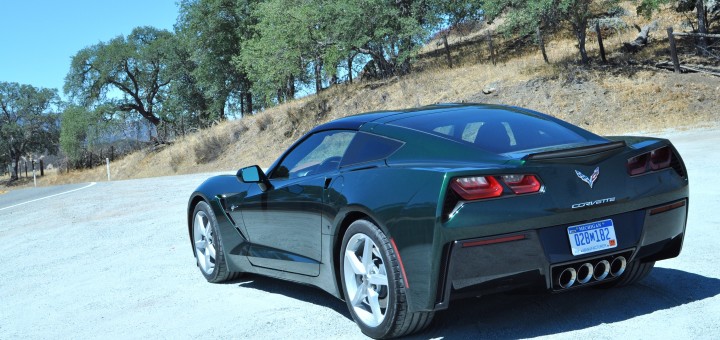
2014-Corvette-Stingray-Lime-Rock-Green-Three-Quarter-Rear-720x340.jpg

ABERDEEN, Feb. 26 – An insured’s failure to cooperate in the investigation of the claimed theft of his Corvette entitled his insurer to judgment as a matter of law on coverage and bad faith claims, a Mississippi federal judge has ruled.

In Holt v. Victoria Fire & Casualty Company, Plaintiff Eddie Gray Holt claimed his 2008 Corvette was stolen from an Alabama parking lot where it was left overnight, and filed a theft claim with his insurer, Victoria.  Because video surveillance of the parking lot did not show the presence or the theft of the car, Victoria sought Holt’s Examination Under Oath, and requested in writing that he bring to the examination documentation, including documentation regarding his finances, income, and expenses.

At his examination, Holt refused to produce the requested documents, and refused to answer certain questions.  After Victoria denied his claim, he filed a breach of contract and bad faith suit, after which Victoria moved for summary judgment on grounds that Holt breached several contractual duties in the policy, most notably his contractual duty to cooperate in the investigation of any claim.

After reviewing not only the applicable policy language but Mississippi common law, U.S. District Judge Carlton Reeves ruled that Holt’s refusal to cooperate in the investigation voided the policy, and entered judgment for Victoria on breach of contract and bad faith claims.

Holt v. Victoria Fire & Casualty Co., (N.D. Miss., March 3, 2016)

NY: No Coverage For Negligent Handling of Electronic Data

edi-spotlight-banner

NEW YORK, Feb. 18 – A New York  intermediate appellate court ruled on Feb. 18 that claims against an insured for the alleged negligent handling of the electronic data of customers were  not covered.

In RVST Holdings v. Main Street America Assurance Co., the  liability policy in question provided for defense and indemnity to RVST for liability arising out of direct physical loss to tangible property.  The policy, however, excluded losses relating to electronic data.  The intermediate appellate court, giving the language in question its plain meaning, ruled that the insurer did not have a duty to defend or indemnify  RVST from claims relating to RVST’s alleged negligent handling of electronic data.

RVST Holdings, Inc. v. Main Street America Assurance Co.,(N.Y. App. 3rd Dept., Feb. 18, 2016)

Unfair Trade Claims Not Covered By Liability Insurance, Pa. Appeals Court Rules

penalty2_5139_356

PITTSBURGH, Feb. 25 – The Pennsylvania Superior Court has ruled that Westfield Insurance is not obligated to defend or indemnify an insured from civil claims of unfair trade practices.

Westfield’s insured, PeopleKeys,  sued a former employee for misappropriation of trade secrets in federal court in Ohio, and the employee filed a counterclaim against PeopleKeys, alleging unfair business competition.  The counterclaim alleged that PeopleKeys’ suit was baseless, and done for the purposes of unfair competition with the former employee.  The counterclaim against PeopleKeys alleged PeopleKeys’ knew of the falsity of the allegations contained in the Ohio trade secrets litigation.  PeopleKeys submitted the counterclaim for defense and indemnity to its insurer, Westfield.

After Westfield denied coverage under the policy’s  Personal Advertising Injury Coverage Endorsement, PeopleKeys filed a breach of contract and bad faith suit against Westfield in Pennsylvania state court.  Westfield filed a motion for judgment on the pleadings, on grounds that the policy’s Personal Advertising Injury Endorsement did not apply to the Ohio counterclaim, and even if it did, the endorsement contained exclusions for 1.)  claims alleging knowing violation of the rights of another, or 2.)  claims for publication of material the insured knew to be false.  The trial court granted the motion and dismissed the claims against Westfield.

The Pa. Superior Court affirmed the trial court’s grant of Westfield’s motion for judgment on the pleadings, holding that Westfield had no duty to defend nor indemnify PeopleKeys in the Ohio litigation because the intentional conduct and knowing falsity exclusions to the Personal Advertising Injury Endorsement applied.  The Court, analyzing the counterclaim against Westfield under Ohio law, found that the allegations against Westfield plainly referred to intentional misconduct on the part of PeopleKeys, thereby barring coverage.

PeopleKeys, Inc. v. Westfield Insurance Company (Pa. Super., Feb. 25, 2016)

Cyber Insurance: Judge Holds Insurer’s “Privacy Pledge” Could Be Part of Policy In Data Breach Class Action

cyber-liability

CHICAGO, Feb. 23 – A Federal Judge in Illinois has allowed a proposed data breach  class action case against an insurer to proceed, ruling the insurer’s “Privacy Pledge” could be a part of the insuring agreement.

Dolmage and other employees of Dillard’s Stores purchased coverage from Combined Insurance through her employer between 2011 and 2012.  During the course of the application process, Dolmage and other employees were required to provide personal information to Combined.  During the process Combined furnished applicant’s with a “Privacy Pledge,” which indicated that personal information obtained in the application process, such as social security numbers, would be safeguarded and protected.   The Pledge further stated that Combined would provide information to affiliated companies to assist with the insurance placement process.

Combined engaged Enrolltek to assist with processing and placement of the coverage, and provided Enrollteck with a database of applicants’ information, which Enrolltek copied to an unsecure external hard drive and later maintained on an unsecured website.  Dolmage and other employees discovered through Google searches that their personal information from this process was readily available online at the unsecure website operated by Enrolltek.

Dolmage and other class action plaintiffs filed a ten – count complaint in federal court alleging, among other things, breach of contract and breach of fiduciary duty.  Following a Rule 12(b)(6) motion filed by Combined, the class action plaintiffs filed an amended complaint alleging only a breach of contract claim, and Combined filed a motion to dismiss, alleging that the complaint failed to state a plausible cause of action against it relating to the “Privacy Pledge” serving as the basis for a breach claim.

Judge Ruben Castillo denied Combined’s dismissal motion, and ruled that the Privacy Pledge, as the Plaintiffs alleged, was part of the insuring agreement between Combined and the Dillard’s employees, despite an integration clause in the policy, presumably preventing the policy from being supplemented.  Castillo ruled that at other parts of the policy,  Combined did incorporate by reference other extraneous documents, such as applications, riders, and endorsements.   The Court also relied on case law and Black’s Law Dictionary to point out that the terms “rider” and “endorsement” were broad, covering many possible amendments to the insuring agreement.

The Court, accepting all of the averments of the amended complaint as true, and giving the Plaintiffs the benefit of all reasonable inferences,  also dismissed Combined’s arguments that the amended complaint 1.) failed to allege that the Plaintiff’s relied on the pledge,  2.) failed to allege the Privacy Policy was part of the insuring agreement because it was provided to Plaintiffs after coverage was placed, 3.) failed to allege the Privacy Policy was supported by adequate consideration; and 4.) failed to allege how Combined breached the policy.  As to the latter claim, Judge Castillo observed that it was reasonable to infer that Combined’s failure to require Enrolltek to adhere to Combined’s data security policies and procedures could constitute a breach of the Privacy Policy.

Dolmage v. Combined Insurance Co. of America (N.D. Ill, February 23, 2016)

Third Circuit Rules Subcontractor’s Insurer Must Defend, Indemnify Construction Project Owner

con3

PHILADLEPHIA, Feb. 17 – The U.S. Third Circuit Court of Appeals has ruled that the insurer of a subcontractor who employed an injured worker must defend the project owner  in the personal injury litigation brought by worker, regardless of the subcontractor’s immunity under Pennsylvania workmens’ compensation law.

In Ramara v. Westfield, the Court provided a succinct statement of the facts:

Appellee, Ramara, Inc. (“Ramara”), the garage owner, engaged Sentry Builders Corporation (“Sentry”) as a general contractor to perform work at its parking garage, and, in turn, Sentry engaged a subcontractor, Fortress Steel Services, Inc. (“Fortress”), to  install concrete and steel components as part of the work. As  required by its subcontracting agreement with Sentry, Fortress obtained a general liability insurance policy (“the Policy”) from Westfield Insurance Group (“Westfield”) naming Ramara as an additional insured under the Policy. While Fortress was working on the project in April 2012, one of its employees on the job, Anthony Axe, was injured in an accident. As a result of his injury, Axe filed a tort action against Ramara and Sentry but he did not include Fortress as a defendant as it was immune from actions at law by its employees for injuries suffered on the job if they were entitled to compensation for their injuries under the Pennsylvania Workers’ Compensation Act (“Act”).   Ramara tendered its defense in Axe’s action to Westfield. But Westfield declined to defend Ramara as it claimed that Axe’s complaint against Ramara did not include allegations imposing that obligation on it under its Policy with its applicable endorsements.

The policy secured by Fortress naming Ramara as an additional defendant contained an Additional Insured Endorsement, under which Ramara was entitled to defense and indemnity if the underlying personal injury action alleged that the plaintiff’s injuries were in whole or in part caused by Fortress, the named insured.    Westfield claimed that since the complaint, which did not name Fortress as a defendant, contained no express averments of wrongdoing against Fortress, Ramara was not entitled to defense and indemnification.

Judge Morton Ira Greenberg undertook an examination of the underlying personal injury complaint, and concluded there were sufficient allegations implicating Fortress’ role in causing the accident, its legal immunity notwithstanding:

Taken together and construed liberally in favor of Ramara for purposes of this insurance coverage case, these allegations partially base Ramara’s liability on its failure to supervise the work of its contractors or subcontractors who used equipment improperly and disregarded a site specific fall protection plan, all while performing their work in violation of the industry’s standard of care. Fortress, though engaged by Sentry, was one of Ramara’s subcontractors, and Axe’s employment by Fortress was the sole reason that Axe was at the job site and was injured. Clearly, Axe made factual allegations that potentially would support a conclusion that Axe’s injuries were “caused, in whole or in part” by Fortress’s acts or omissions.

Of course, we need not and, indeed, cannot decide whether Axe will succeed on these claims at trial. Ramara only must show that the Axe complaint, when liberally construed in favor of Ramara, includes allegations to support a conclusion that Fortress was potentially negligent and that its negligence was a proximate cause of Axe’s injuries. We conclude that it does. Accordingly, Ramara comes within the Additional Insured Endorsement of the Policy with respect to the Axe case. Therefore, Ramara is entitled to a defense in the Axe case even under Westfield’s narrow interpretation of the Additional Insured Endorsement limiting coverage to situations in which an insured’s contractor’s actions proximately caused a plaintiff’s injuries.

(emphasis added).

The Court ruled that the workmen’s compensation immunity which Fortress enjoyed was not dispositive of whether the factual allegations of the complaint made out a case that but for Fortress’ acts or omissions, the injury would not have occurred, thereby entitling Ramara to defense and indemnity under the Westfield policy insuring Fortress.  The Court affirmed the District Court judgment holding Westfield liable for the defense and indemnity of Ramara in the underlying personal injury litigation.

Ramara v Westfield Ins. Co., (Third Cir., Feb. 17, 2016)

Sub-Surface Water Loss Mostly Excluded By Policy, Texas Judge Rules

pipe%20leak%203

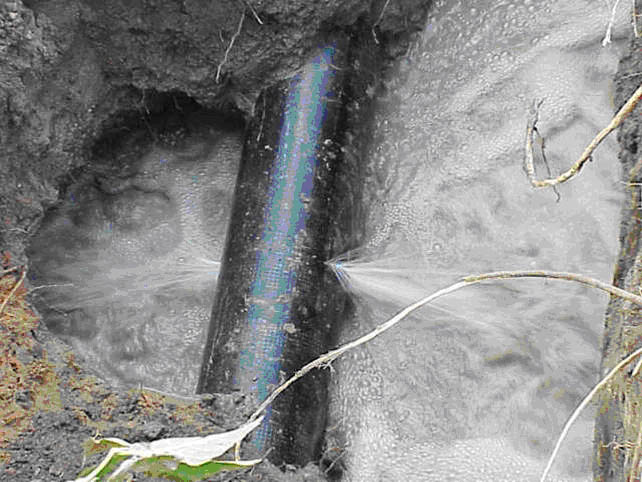
HOUSTON, Feb. 16 – A district judge in the Southern District of Texas has dismissed breach of coverage and bad faith claims against Praetorian Insurance Company, ruling that several of the policy’s coverage exclusions defeat the insured’s claims for property damage arising from a water related loss.

In Praetorian v. Arabia Shrine, a building owned by the Shrine suffered a subs-surface water loss which seeped into the building causing more than $1.8 million worth of damage to the foundation and building on March 14, 2014.   While the policy provided for coverage of for the loss of fire suppression equipment, and Praetorian paid nearly $64,000.00, it disclaimed nearly $2 million in other claims made by the Shrine.

The Policy contained an exclusion for damage to foundational elements, as well as an exclusion for damage to sub-surface piping.  The policy was also endorsed with a “Water Exclusion” disclaiming coverage for damage caused the escape or seepage of subsurface water into the building.

Judge Keith Ellison found that Praetorian met its burden of showing that the exclusions precluded the vast majority of coverage for the underground water loss.    The judge also found that since Praetorian had a reasonable basis to deny coverage, claims for breach of the Texas Insurance Code, and for the breach of Praetorian’s duty of good faith and fair dealing should also be dismissed by way of summary judgment as well.

Praetorian Ins. Co. v. Arabia Shrine Center Houston (S.D. Texas Feb. 16, 2016)

9th Circuit: Insured’s Contract, Bad Faith Claims Get The Gate

driveway-gate1

SAN FRANCISCO, Feb. 11 – The U.S. Court of Appeals for the Ninth Circuit has affirmed a district court’s dismissal of breach of contract and bad faith claims against Allstate, arising out of Allstate’s refusal to defend or indemnify its insured from a claim that the insureds committed trespass by destroying property.

In Zimmerman v. Allstate, Allstate’s insureds were sued by a homeowner’s association for trespassing upon and destroying a residential community gate.  The destruction was pre-meditated, according to the district court record.  After the insureds submitted the claim for defense and indemnity, Allstate denied the claim, and the insureds filed suit.  The district court entered summary judgment for Allstate, finding that the underlying complaint did not seek damages for an accidental occurrence, but rather for trespass, an intentional tort.

In affirming, the Ninth Circuit Court of Appeals found that the premeditated act of destruction of property committed by the insureds was neither “unexpected” nor “unintended,”  and therefore not an occurrence as defined in the policy.  The Court also affirmed dismissal of claims of breach of the duty of good faith and fair dealing.

Zimmerman v. Allstate, (9th Cir. Feb. 11, 2016)

Winning the Arson/Fraud Case – Part II

In an earlier post, we examined some key points to structuring and winning a civil arson/fraud trial against an insured suspected of misconduct in the making of an insurance claim.  We resume our examination in Part II of Winning the Arson/Fraud Case.

Your Claims Adjuster and Claims Witnesses Must Be Demonstrably More Credible Than The Insured(s)

This is a vital assessment which must made in an objective, detached manor.  Hoping that your claims staff will appear more credible than the insured is not sufficient grounds to proceed to try the arson/fraud case.  A reasoned, detached analysis of the insurer witnesses must be done to determine whether they, individually and as a whole, will stand up to the scrutiny of the jury, and be judged more credible.

Beware of the landmines here. How can claims staff be cross-examined?  Are there any troubling issues in their employment histories?  Do they appear to be partial or biased based on the documentation in the claims file and the claims logs?  Are any of them disgruntled in some way or worse, disgruntled in some way and not forthcoming about it.

Next to the law enforcement witnesses, the claims witnesses are the most important pieces in winning the arson/fraud trial.  They deserve detailed vetting as soon as possible in the process.

Who Let The Dogs Out?

This is going to sound silly.  But this indicator has almost never in 25 years of practicing law led me astray from assessing the proper cases to take to trial.

Did the insured have any pets?  Are they normally kept inside?  Did they perish in the fire, or was there some unusual event or explanation which led them to being out of the house at the time of the fire?

Arsonists love their dogs like anybody else.  The average one-off arsonist is simply neither aware enough nor disciplined enough to sacrifice a family pet  to create the impression of a fire of actual unknown origin.   Electrical malfunctions and other accidental fires do not take time to lead otherwise confined pets to safety before they begin.  Almost all arsonists do, however.  The notable exception to this guideline is the rage or anger fire in which the arsonist attempts to harm a pet of the object of his anger — which is a very, very small percentage of intentionally set fires, in my experience.

Look For Mistakes

Some arsonists are more skilled than others. Few are hired professionals, and the amateurs make plenty of mistakes.  Combining the stress of the circumstances which would lead an insured to commit arson for insurance benefits,  and a basic lack of experience in such activity generally leads to a break or two in the fire investigation —  telltale signs of intentionally set fire versus fire of accidental cause and origin.

The following mistakes have all occurred in cases I have handled, including one case in which all of the mistakes occurred in the same fire.  Some of these are sure to strike you as fantastical but they all are true:

  • multiple points of origin which did not communicate with each other;
  • failure to ventilate the fire by opening doors and/or windows;
  • leaving incriminating documents such as  a mortgage foreclosure notice dated within 10 days of the fire  in the area of origin;
  • failing to dispose of lighters/ignition sources in the areas or origin;
  • failing  to plug in electrical appliances which were later offered by the insured as probable sources of an accidental fire
  • writing an apology to a spouse in soot on a window following the fire (this one is not so much as a mistake as it is a confession of the subconscious, I imagine)
  • using a cell phone to call a business associate about the fire twenty minutes before calling 911 Emergency Services to report the fire.

The case in which all of these mistakes occurred in the same fire  was readily identified as an arson/fraud case which should be tried.   And while that particular case is an outlier to put it mildly, most arson fires do not go perfectly for the arsonist, and mistakes can be identified.  They should be pointed out and shown to the jury.

Do Not Forget Damages

In the bustle and effort spent establishing the insured’s liability for arson/fraud, the fact that many statutes provide a right of reimbursement and recovery to the insure is lost, and insurers as a result do not take sufficient advantage of recouping expenses and costs related to investigating the fire, and recouping claims dollars which may have been paid out during the pendency of the claim.

In many ways, an insurer used to being a defendant must become a plaintiff fur purposes of not only putting on an arson/fraud case, but also for putting on a damages case as well.  Costs and claims dollars must be tracked, organized, and presented in the form of cogent damages exhibits and/or summary exhibits, preferably using the same trial presentation software as discussed in the first half of this post.  SIU and other special investigators employed by the insurers, and claims staff can authenticate these items for admission into evidence.

Some states provide for recovery of multiples of such costs, and attorneys fees in the form of penalties.  For that reason, they should not be overlooked if the decision to try the arson fraud case has been made.

Arson/Fraud Cases Can Be Won

While it does require thought and effort, the right arson/fraud cases can be won by insurers who take the time to identify good candidates, and work those candidates up properly for trial.  The prosecution of civil arson/fraud claims can also be a source for the insurer to recoup costs and claims dollars thought to have been lost in the investigation and payment of fraudulent claims.

C.J. Haddick


NJ: National Union Avoids Claim Due To Late Notice; Need Not Show Prejudice

NEW JERSEY,  Feb. 11 – The New Jersey Supreme Court has ruled that National Union Fire Ins. Co. of Pittsburgh need not demonstrate prejudice  to avoid liability to provide defense and indemnity to an insured who reported the underlying claim six months late,  in violation of the policy’s notice requirements.  In Templo Fuente De Vida Corp. v. National Union Fire Ins. Co. of Pittsburgh, the Court ruled that the insurer did not have to defend or indemnify its insured, First Independent Financial Group, in a lender liability suit brought by putative borrowers.

The policy provided that First Independent provide notice of any claim made against it  during the policy period, or within 30 days following the end of the policy period, provided the notice was no later than 30 days following the insured’s initial notice of the claim.    First Independent did not report the claim at issue  until six months after it was sued, had hired its own counsel, and answered the complaint.  National Union denied coverage  on grounds of late notice, and First Independent settled the underlying claims in part, assigning to the plaintiffs its coverage claims against National Union.

The assignee plaintiffs filed a declaratory judgment action, and National Union was granted summary judgment based on the late notice defense.  An intermediate appeals court affirmed the ruling in favor of National Union.

In affirming the ruling in favor of National Union, the Court undertook an analysis of the differences between claims made policies and occurrence policies, and wrote:

Claims made policies commonly require that the claim be made and reported within the policy period, thereby providing a fixed date after which the insurance company will not be subject to liability under the policy. … Claims made policies also tend to have an additional notice of claim provision phrased in terms of the insured notifying the insurer of a claim or potential claim promptly or the like[.] 13 Couch on Insurance 3d 186:13 (2009).

The prompt notice requirement and the requirement that the claim be made within the policy period in claims made policies maximiz[e] the insurer s opportunity to investigate, set reserves, and control or participate in negotiations with the third party asserting the claim against the insured and mark the point at which liability for the claim passes to an ensuing policy,

The Court also held that in the claims made context, prejudice was not an element of establishing the late notice defense:

[W]hen First Independent began defending against plaintiffs claims without first notifying National Union, an action explicitly barred by the terms of the policy, it violated a condition precedent of timely notice to National Union, and thus breached the policy’s express condition of notice of a claim in order for coverage to attach. We decline plaintiffs invitation to read the insurance policy at issue as a contract of adhesion, or engage in a strained construction to support the imposition of liability or write a better policy for the insured than the one purchased…

 Accordingly, we hold that First Independent s failure to comply with the notice provisions of the bargained for Directors and Officers policy constituted a breach of the policy, and National Union may decline coverage without demonstrating appreciable prejudice. We recognize that a different conclusion may have been reached in other jurisdictions, but our jurisprudence has never afforded a sophisticated insured the right to deviate from the clear terms of a claims made policy.

The Court unanimously upheld judgment as a matter of law in favor of National Union.

Templo Fuente De Vida Corp. v. National Union Fire Ins. Co. of Pgh., (N.J. 2016)

Breach of Contract, Bad Faith Cases Dismissed In Pittsburgh

PITTSBURGH, Feb. 5 – Chief District Magistrate Judge Maureen Kelly has dismissed breach of contract and bad faith claims against State Farm by an insured contractor, finding that the underlying allegations of damage caused by the contractor fell outside of policy period.

Reginella Construction was insured under a contractor’s liability policy with State Farm between July 2004 and May 2006.  In 2013, a homeowner filed suit against Reginella complaining of problems with the floor, caused by poor materials and workmanship.  The homeowner subsequently won the underlying case against Reginella.  State Farm denied defense and indemnity to Reginella in February 2014, claiming that the occurrence per the suit against Reginella fell outside of the policy period(s).

After Reginella sued State Farm in Allegheny County, Pa. in 2015, State Farm removed the case to federal court and filed a motion to dismiss pursuant to F.R.C.P. 12(b)(6).

“Although the cause of the damages to the Eck home was arguably within the coverage period, ‘the cause of injury . . . has no special relevance to determining the date an insurance policy is triggered, unless specifically required by the language of the applicable policy of insurance.’ Where, as here, there is no policy language requiring the cause of injury to be identified, Pennsylvania courts apply the ‘first manifestation rule’ to occurrence policies; that is, the court looks to when injury is ‘reasonably apparent,’ i.e., when it is first manifested.”

Judge Kelly granted State Farm’s motion to dismiss, based on the first manifestation rule and the allegations of the underlying complaint against Reginella, the damage caused by Reginella’s conduct fell outside of the applicable policy period.

Because the Court found that State Farm’s coverage position was supported by a “plain reading” of the policy provisions, it dismissed bad faith claims against State Farm as well.

Reginella Construction Co., Inc. v. State Farm Fire and Casualty Co., (W.D. Pa. Feb 5. 2016)(Kelly, C.M.J.)