Delaware: Bad Faith Limitations Period Starts Only Upon Excess Judgment

StatuteLimitations.jpg

NEWARK, DE., March 4 – The Delaware Supreme Court has ruled that a third party  bad faith cause of action does not begin to run for statute of limitations purposes until the underlying excess judgment upon which the claim is based becomes final.  In Connelly v. State Farm Mut. Auto Ins. Co., the Court found that such an approach “conserves litigant and judicial resources,” and that the rule permitted an insured to plead requisite damages, “which she cannot do before there is a final excess judgment against her.”

In Connelly, State Farm’s insured, Brown, rear ended Connelly, who sued Brown.  In May 2011, Connelly offered to settle with Brown for $35,000 of Brown’s $100,000 per per son liability limit, which State Farm declined on Connelly’s behalf.  State Farm stipulated to Connelly’s negligence at trial and the jury awarded Connelly nearly $225,000.   That judgment became final on April 29, 2012.

After State Farm paid only half the judgment, Connelly sued State Farm as a judgment creditor on September 3, 2014 , claiming among other things bad faith.  The Delaware Superior Court dismissed the complaint, ruling that the claims were untimely, the applicable three year statute of limitations having begun to run from the date of State Farm’s alleged wrongful act of  declining the settlement in May of 2011.

The Supreme Court reversed, and in so doing conducted an extensive survey of the precedents in other states, as well as leading insurance treatises to arrive at the result.  It also point out that the ruling was consistent with the Delaware Corporate code and Chancery Court decisions  which provide that indemnity claims  to not accrue until there is a final judgment.

Connelly v. State Farm Mut. Auto Ins. Co., (Delaware March 4, 2016)

Tender of Limits Does Not Moot Jury Valuation of UM/UIM Claim, Florida Supreme Court Rules

What-does-an-auto-insurance-policy-look-like-2-e1310427553251

TALAHASSEE, Feb. 25 – The Florida Supreme Court in a 5-2 decision  has ruled that a UM/UIM insured is entitled to a trial on underlying liability and damages before proceeding to litigate a bad faith claim, and that such a right is not mooted by the insurer’s tender of policy limits.

In Fridman v. Safeco Insurance Company of Illinois, the Supreme Court of Florida reversed a trial court ruling which vacated a $1,000.000 verdict in favor of the insured.  The trial court reasoned that Safeco’s pre-verdict tender of the policy’s  $50,000 UM/UIM limit mooted litigation of the UM/UIM claim.

After largely unproductive settlement negotiations, in February 2011, about 30 days before Fridman’s UM/UIM claim against Safeco was to be tried, Safeco tendered its $50,000 policy limit to Fridman.  The tender came more than four years after the underlying automobile accident, and more than a year after the plaintiff demanded the policy limits from Safeco.

Fridman twice refused accepting the tender, and Safeco moved to confess judgment in the amount of the policy  limits, which was denied by the trial court.  At the trial of the UM/UIM claim, the jury awarded Fridman $1,000,000, but an intermediate appeals court ruled that the judgment should be amended to omit any reference to the verdict, or to the trial court retaining jurisdiction to entertain a follow – on bad faith claim arising out of the excess verdict.

In reversing the Fifth District Court of Appeals, the Florida Supreme Court revewed a long line of decisions holding that the insured retained the right to litigate underlying liability a damages as a prerequisite to a bad faith proceeding against the insurer, because such items were required elements of proof in a bad faith proceeding in Florida.  Justice Barbara Pariente wrote:

Certainly, the insured is not obligated to obtain the determination of liability and the full extent of his or her damages through a trial and may utilize other means of doing so, such as an agreed settlement, arbitration, or stipulation before initiating a bad faith cause of action. See, e.g., Dadeland Depot, Inc. v. St. Paul Fire & Marine Ins. Co., 945 So. 2d 1216, 1234-35 (Fla. 2006). But the availability of other alternatives does not change the insured’s entitlement to a determination of liability and the full extent of damages in the first instance. Therefore, for all these reasons, we conclude that an insured is entitled to a determination of liability and the full extent of his or her damages in the UM case prior to filing a first-party bad faith action.


The Court went on to hold that these underlying determinations of liability and damages in a UM/UIM proceeding were subsequently binding upon the insurer provided the insurer had a full and fair opportunity to offer defense on those items in the UM/UIM proceeding.

We conclude that an insured is entitled to a jury determination of liability and the full extent of his or her damages, which may be in excess of the policy limits, in the underlying UM case, prior to litigating a first-party bad faith cause of action. This determination is then binding in the subsequent bad faith action, provided the parties have had the opportunity for appellate review of any trial errors that were timely raised. An approach such as the one taken by the trial court in this case—that is, going forward with the trial, including the verdict amount in the final judgment, and reserving jurisdiction to consider a motion to amend to add the bad faith cause of action—appropriately addresses how the parties can review that jury determination of the extent of the damages for error prior to it being used in the subsequent bad faith litigation as an element of damages.


The Supreme Court quashed the ruling of the Fifth District Court of Appeals and remanded the case for further proceedings.

Fridman v. Safeco Insurance Company of Illinois (Fla., Feb. 25, 2016)

Unfair Trade Claims Not Covered By Liability Insurance, Pa. Appeals Court Rules

penalty2_5139_356

PITTSBURGH, Feb. 25 – The Pennsylvania Superior Court has ruled that Westfield Insurance is not obligated to defend or indemnify an insured from civil claims of unfair trade practices.

Westfield’s insured, PeopleKeys,  sued a former employee for misappropriation of trade secrets in federal court in Ohio, and the employee filed a counterclaim against PeopleKeys, alleging unfair business competition.  The counterclaim alleged that PeopleKeys’ suit was baseless, and done for the purposes of unfair competition with the former employee.  The counterclaim against PeopleKeys alleged PeopleKeys’ knew of the falsity of the allegations contained in the Ohio trade secrets litigation.  PeopleKeys submitted the counterclaim for defense and indemnity to its insurer, Westfield.

After Westfield denied coverage under the policy’s  Personal Advertising Injury Coverage Endorsement, PeopleKeys filed a breach of contract and bad faith suit against Westfield in Pennsylvania state court.  Westfield filed a motion for judgment on the pleadings, on grounds that the policy’s Personal Advertising Injury Endorsement did not apply to the Ohio counterclaim, and even if it did, the endorsement contained exclusions for 1.)  claims alleging knowing violation of the rights of another, or 2.)  claims for publication of material the insured knew to be false.  The trial court granted the motion and dismissed the claims against Westfield.

The Pa. Superior Court affirmed the trial court’s grant of Westfield’s motion for judgment on the pleadings, holding that Westfield had no duty to defend nor indemnify PeopleKeys in the Ohio litigation because the intentional conduct and knowing falsity exclusions to the Personal Advertising Injury Endorsement applied.  The Court, analyzing the counterclaim against Westfield under Ohio law, found that the allegations against Westfield plainly referred to intentional misconduct on the part of PeopleKeys, thereby barring coverage.

PeopleKeys, Inc. v. Westfield Insurance Company (Pa. Super., Feb. 25, 2016)

Sub-Surface Water Loss Mostly Excluded By Policy, Texas Judge Rules

pipe%20leak%203

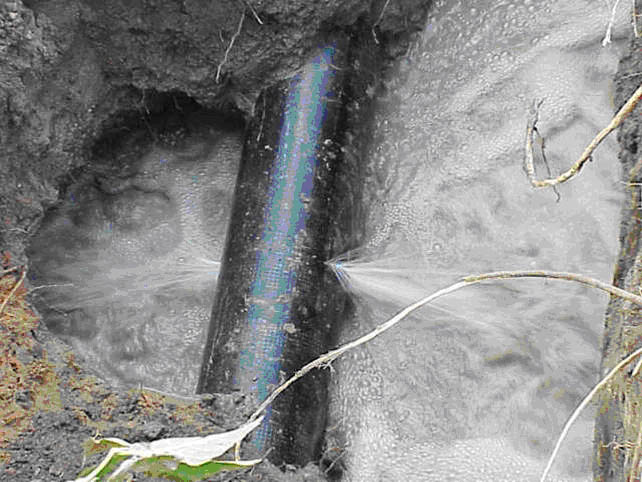
HOUSTON, Feb. 16 – A district judge in the Southern District of Texas has dismissed breach of coverage and bad faith claims against Praetorian Insurance Company, ruling that several of the policy’s coverage exclusions defeat the insured’s claims for property damage arising from a water related loss.

In Praetorian v. Arabia Shrine, a building owned by the Shrine suffered a subs-surface water loss which seeped into the building causing more than $1.8 million worth of damage to the foundation and building on March 14, 2014.   While the policy provided for coverage of for the loss of fire suppression equipment, and Praetorian paid nearly $64,000.00, it disclaimed nearly $2 million in other claims made by the Shrine.

The Policy contained an exclusion for damage to foundational elements, as well as an exclusion for damage to sub-surface piping.  The policy was also endorsed with a “Water Exclusion” disclaiming coverage for damage caused the escape or seepage of subsurface water into the building.

Judge Keith Ellison found that Praetorian met its burden of showing that the exclusions precluded the vast majority of coverage for the underground water loss.    The judge also found that since Praetorian had a reasonable basis to deny coverage, claims for breach of the Texas Insurance Code, and for the breach of Praetorian’s duty of good faith and fair dealing should also be dismissed by way of summary judgment as well.

Praetorian Ins. Co. v. Arabia Shrine Center Houston (S.D. Texas Feb. 16, 2016)

Defeating The Third Party Time Limit Settlement Demand

istock_000016351137xsmall-2

It’s the most common arrow in the quiver of plainfiffs’ lawyers when it comes to dealing with insurance companies:  the time limit settlement demand.  It’s used as a multi-purpose tool  against insurers to 1.) force an early settlement of the underlying third party  claim; 2.) prevent the insurer from conducting a full investigation into the underlying claim; 3.) drive a wedge between the insurer and its insured; and 4.) set up assignment of a follow-on bad faith claim in the event of an excess verdict in the third party claim.

Here’s how insurers can successfully defend against this tactic every time:

Document Receiving The Demand, And Immediately Request An Extension To Respond

This seems a rather obvious suggestion, but in practice it is overlooked as many times as utilized,  in my experience.   The failure to document receipt of the time limit settlement demand will not be of any help, and it exposes the insurer to the allegation of sloppy claims handling and inattentiveness to the claim.   If it arrives, when it arrives, acknowledge it in writing to the Plaintiff’s lawyer.

Especially when the time limits demand arrives early in the claims investigation, a written request for extension to respond to the demand should be made in writing immediately.  And of course, any refusal by plaintiff’s counsel to agree to the extension should be documented as well.

Document The Investigation Which Must Be Done Before Responding

While not strictly necessary, it is extremely helpful to identify with as much specificity as possible  the nature and extent of investigation you would like additional time to complete.    Providing these specifics will prevent any claim that the insurer is merely requesting additional time to delay paying the claim.

Obviously, the proposed investigation steps should be followed, and the results documented in the claims file.  Requesting an extension to investigate the claim and then failing to do the investigation exposes an insurer to bad faith exposure for  unreasonable delay.

Document Any Attempts By The Plaintiff’s Lawyer To Delay or Obstruct The Investigation

It happens.  Some zealous advocates are not content with merely refusing a request for an extension; in order to manufacture insurer delay the insurer will find that it is unable to get medical authorizations promptly, or unable to schedule the claimant’s examination under oath, to name two.  It is important that the claims file document accurately document responsibility for delay, or for expiration of the time limit demand, especially if the plaintiff’s lawyer is being either not helpful or worse, obstructing the investigation.

Keep The Insured Apprised, And Document That

In order to discharge the fiduciary duty an insurer owes to its insured in defending him or her in a third partly claim, the insured must be included and involved in communications involving the claim.  This is especially true where the insurer refuses to settle the underlying claim within policy limits, theoretically exposing the insured to an excess judgment.

An insurer does not have an obligation to settle non-meritorious or questionable claims within the insured’s policy limits.  However, if the insurer decides not to respond to a time limit demand, or refuses to settle a claim,  that should be communicated to the insured in advance of the time limit demand deadline, and the specific reasons for the insurer’s course should be provided to the insured.

Dual Benefits

All of the above steps will not only be of use in defending a follow – on bad faith claim should it come down the road, but it will lead to better results, and allow for proper investigation, of the underlying third party claim.  For more information on how to effectively rebut and defend against third party time limit settlement demands, reach me at chaddick@dmclaw.com or 717-731-4800.


11th Circuit Says Jury To Decide Bad Faith Issues In Road Rage Settlement

tungoil4wheel22

FLORIDA, Jan. 12 – The U.S.  11th Circuit Court of Appeals has remanded a bad faith case to the U.S. District Court for the Middle District of Florida, instructing it that a jury must decide whether Geico acted in bad faith relative to the settlement negotiations arising out of a road rage incident.

Geico’s insured, Moore, was involved in a road rage incident in Florida, resulting in his truck being bumped across the center line, causing it to strike and later kill motorist Amy Krupp. Geico promptly tendered its $20,000.00 policy limit to the lawyer representing Krupp’s estate, but failed to comply with counsel’s request for an affidavit of no other insurance, and a precisely worded release agreement.

Because Geico did not comply with the provisos relating to the affidavit or the release, settlement was not reached,  and Krupp’s estate won a $4 million verdict against Moore.  Moore then filed a bad faith suit against Geico in federal court in Florida.  The district court, while conceding that Geico’s handling of the claim may have been “sloppy” and “bordering on negligent,” granted summary judgment for Geico, from which Moore appealed.

The 11th circuit reversed, finding that a jury question existed regarding the interplay between Geico and the Krupp estate’s lawyer.  The Court was careful to agree with the trial court that negligence on the part of the insurer was not sufficient to make out a bad faith claim.  It further, found, however, that there was conflicting evidence as to Geico’s conduct, and that negligence could be considered as part of the “totality of the circumstances” in the bad faith analysis.

The Court found that the trial court impermissibly made credibility determinations, most notably as to the deposition testimony of the lawyer for the Krupp estate, and that it ignored expert opinion proffered by the estate against Geico, both of which should have been considered by a jury.   It also found that the district court was too focused on the possibility that Krupp’s counsel was engaged in a bad faith setup.   The case was remanded for further proceedings.

Moore v. Geico (11th Cir., Jan. 12, 2016)

Editor’s Note:  There is a grave danger of converting the bad faith standard to a mere negligence standard when the Court takes negligence into account as part of the “totality of the circumstances.”  Here, the 11th Circuit apparently held evidence of the possibly negligent handling of a settlement sufficient to subject an insurer to the rigors of a bad faith trial.  There is an argument to be made also that if the trial court payed too much attention to the possibility of a bad faith setup by plaintiff’s counsel in granting summary judgment , the 11th Circuit payed far too little in reversing it.

For more information on how to protect your company from bad faith exposure arising out of allegations of simple negligence, reach me at chaddick@dmclaw.com or 717-731-4800.

9th Circuit: Insured’s Contract, Bad Faith Claims Get The Gate

driveway-gate1

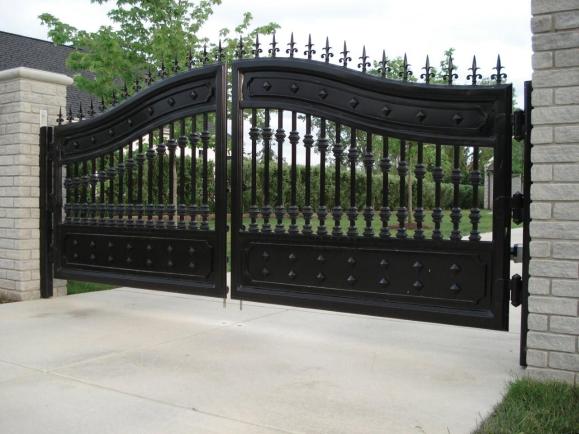
SAN FRANCISCO, Feb. 11 – The U.S. Court of Appeals for the Ninth Circuit has affirmed a district court’s dismissal of breach of contract and bad faith claims against Allstate, arising out of Allstate’s refusal to defend or indemnify its insured from a claim that the insureds committed trespass by destroying property.

In Zimmerman v. Allstate, Allstate’s insureds were sued by a homeowner’s association for trespassing upon and destroying a residential community gate.  The destruction was pre-meditated, according to the district court record.  After the insureds submitted the claim for defense and indemnity, Allstate denied the claim, and the insureds filed suit.  The district court entered summary judgment for Allstate, finding that the underlying complaint did not seek damages for an accidental occurrence, but rather for trespass, an intentional tort.

In affirming, the Ninth Circuit Court of Appeals found that the premeditated act of destruction of property committed by the insureds was neither “unexpected” nor “unintended,”  and therefore not an occurrence as defined in the policy.  The Court also affirmed dismissal of claims of breach of the duty of good faith and fair dealing.

Zimmerman v. Allstate, (9th Cir. Feb. 11, 2016)

Judge Rules DWI Victims Adequately State Bad Faith Claim Against Progressive

PHILADELPHIA, Feb. 4 – U.S. District Judge Timothy J. Savage has denied a motion to dismiss filed by Progressive Insurance Company in response to a bad faith complaint filed by Progressive insureds Jeffrey and Aimee Kelly arising out of a UM/UIM claim.    The Court did dismiss, however, claims the Kellys made against progressive under the Pa. Unfair Trade Practices and Consumer Protection Law.

The Kellys were injured in 2010 when their vehicle was struck from behind by a drunk driver.  They settled with the drunk driver for the driver’s policy limits, and then filed a UM/UIM claim with their own carrier, Progressive.  Progressive denied the claim, and the Kelly’s filed suit.

The Judge stated succinctly:

The Kellys allege that Progressive failed to pay their claims, make a reasonable settlement offer, investigate their claims properly, and consider medical and other documentation. These allegations suffice to state a claim under § 8371… The insurance bad faith statute applies to post-contract formation conduct. The UTPCPL, on the other hand, applies to conduct surrounding  the insurer’s pre-formation conduct.  The UTPCPL applies to the sale of an insurance policy.  It does not apply to the handling of insurance claims.

Kelly v. Progressive Advanced Ins. Co., (E.D. Pa. Feb. 4, 2016)(Savage, J.)

Breach of Contract, Bad Faith Cases Dismissed In Pittsburgh

PITTSBURGH, Feb. 5 – Chief District Magistrate Judge Maureen Kelly has dismissed breach of contract and bad faith claims against State Farm by an insured contractor, finding that the underlying allegations of damage caused by the contractor fell outside of policy period.

Reginella Construction was insured under a contractor’s liability policy with State Farm between July 2004 and May 2006.  In 2013, a homeowner filed suit against Reginella complaining of problems with the floor, caused by poor materials and workmanship.  The homeowner subsequently won the underlying case against Reginella.  State Farm denied defense and indemnity to Reginella in February 2014, claiming that the occurrence per the suit against Reginella fell outside of the policy period(s).

After Reginella sued State Farm in Allegheny County, Pa. in 2015, State Farm removed the case to federal court and filed a motion to dismiss pursuant to F.R.C.P. 12(b)(6).

“Although the cause of the damages to the Eck home was arguably within the coverage period, ‘the cause of injury . . . has no special relevance to determining the date an insurance policy is triggered, unless specifically required by the language of the applicable policy of insurance.’ Where, as here, there is no policy language requiring the cause of injury to be identified, Pennsylvania courts apply the ‘first manifestation rule’ to occurrence policies; that is, the court looks to when injury is ‘reasonably apparent,’ i.e., when it is first manifested.”

Judge Kelly granted State Farm’s motion to dismiss, based on the first manifestation rule and the allegations of the underlying complaint against Reginella, the damage caused by Reginella’s conduct fell outside of the applicable policy period.

Because the Court found that State Farm’s coverage position was supported by a “plain reading” of the policy provisions, it dismissed bad faith claims against State Farm as well.

Reginella Construction Co., Inc. v. State Farm Fire and Casualty Co., (W.D. Pa. Feb 5. 2016)(Kelly, C.M.J.)

Texas Judge Rules Bad Faith Claim Inadequate To Survive Summary Judgment

SHERMAN, Feb 4 – A federal judge has ruled that a bad faith suit against State Farm Lloyds arising out of property damage claims lacked sufficient questions of material fact to avoid dismissal by summary judgment pursuant to F.R.C.P. 56.

After the case, involving breach of contract and statutory and common law bad faith claims was removed from Texas state court to federal court, the Plaintiff voluntarily dismissed common law bad faith claims, but retained statutory bad faith claims under the Texas Insurance Statute and the Texas Deceptive Trade Practices Act.

“Plaintiff has failed to cite any evidence that would create a genuine issue of fact as to whether Defendant acted unreasonably in its handling of the claims.”

Judge Amos Mazzant ruled.

He found that the Plaintiff did not produce any credible evidence that the insurer misrepresented provisions of the policy,  misrepresented the authority of the agents, or that it unreasonably delayed the investigation or the processing of the Plaintiff’s insurance claims.

The Court ruled that the Plaintiffs breach of contract claims for coverage should proceed to trial.

Broxterman v. State Farm Lloyds, (E.D. Tx. 2016)(Mazzant, J.)