Third Circuit Affirms Summary Judgment For Nationwide in Bad Faith Case

discovery

PHILADELPHIA, October 4 – Dickie McCamey lawyers C.J. Haddick and Bryon Kaster have won affirmance of a summary judgment in favor of Nationwide Insurance in a bad faith case before the U.S. Court of Appeals For The Third Circuit.

In Bodnar, et al. v. Nationwide Mutual Insurance Company, the Plaintiffs alleged that Nationwide was guilty of bad faith in the investigation of whether or not the work-related death of an employee of its insured was covered or barred by the terms of the  insured’s CGL policy, which included an  Employers’ Liability Exclusion.  During the investigation of the claim, Nationwide  filed a declaratory judgment action because of conflicting information on the employment status of the deceased employee.  Nationwide later dismissed the declaratory judgment action and settled with the estate of the deceased employee’s estate, ultimately agreeing to indemnify its insured.

The decedent’s estate took an assignment of rights from the insured as part of the settlement , and filed a bad faith action against Nationwide in the U.S. District Court for the Middle District of Pennsylvania. Nationwide requested and obtained summary judgment in its favor in the district court, U.S. District Judge Robert Mariani finding:

“The claims file reflects information that indicates that Berry [decedent] variously could have been an employee, a temporary worker, or independent contractor…Plaintiffs may not like how the claim was handled, but it cannot be said that Nationwide breached any duty under these facts.”

In affirming summary judgment, U.S. Third Circuit Judge Thomas Hardiman agreed, finding that Nationwide’s filing of a declaratory judgment,  and subsequent decision to indemnify its insured in the underlying wrongful death action,  reflected both an ongoing investigation and open minds on the part of Nationwide’s claims personnel:

“Given the ambiguities surryounding Berry’s employment status, it was reasonable for Nationwide to seek declaratory relief. . . Appellants failed to show by clear and convincing evidence that Nationwide acted unreasonably in the manner [in which] it handled Bodnar’s claim.”

Bodnar, et. al. v. Nationwide Mutual Insurance Company, No. 15-3485 (3d Cir., October 4, 2016)
Florida: Insurer Liable for Attorneys’ Fees Without Finding of Bad Faith

sinkhole

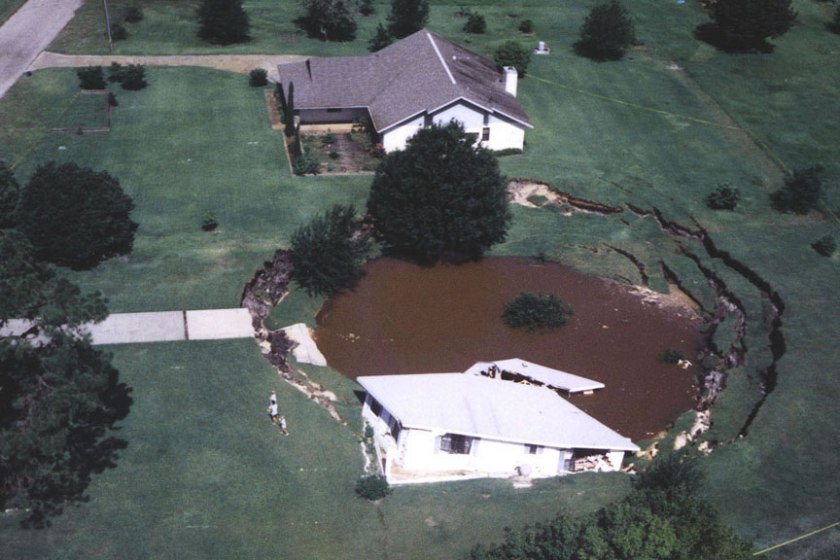
FLORIDA, Sept. 29 – The Supreme Court of Florida has ruled that Omega Insurance can be held liable for the payment of an insured’s attorneys’ fees following the wrongful denial of a sinkhole claim, and that  bad faith is not a prerequisite to such an award.

In a 6-1 decision, the Florida high court reversed the Fifth District Court of Appeal’s ruling that homeowner Kathy Johnson was not entitled to recover attorneys’ fees in the absence of a finding of bad faith.  The majority concluded that the mere wrongful denial of a valid claim was enough to award fees under a Florida attorneys’ fees statute.

Omega obtained a report from a geology firm attributing Johnson’s home damage to causes other than a sinkhole, and used that report as a basis to deny the claim.  Johnson retained her own engineer which concluded that the damage was in fact caused by a sinkhole.

After Johnson filed suit, Omega agreed to undergo a neutral claim review process, after which it changed its decision and agree to pay Johnson’s claim.

Johnson thereafter sought and obtained  interest and attorneys fees under a Florida attorneys’ fees statute at the trial court level . The District Court of Appeals reversed, holding that the relevant statutory provision, Section 627.428, required a finding of bad faith by the insurer to justify a fee award.

The Florida Supreme Court found that the Fifth District’s ruling was contrary to prior Supreme Court precedent holding that fees under 627.428 were awardable upon the finding of merely the wrongful denial of the claim, and not a specific finding of insurer bad faith.

Florida Justice R. Fred Lewis wrote for the majority:

“We cannot, as the court below held and Omega requests here, discourage insureds from seeking to correct the incorrect denials of valid claims and allow insurers to deny benefits to which insureds are entitled without ramifications. . . Here, the facts are undisputed that Johnson submitted a claim, Omega denied that claim, Johnson filed an action seeking recovery, and Omega subsequently conceded that it had incorrectly denied the benefits based on an inaccurate report. . . These facts alone warrant an award of attorneys’ fees to Johnson under Section 627.428. . . Once an insurer has incorrectly denied benefits and the policyholder files an action in dispute of that denial, the insurer cannot then abandon its position without repercussion. . . To allow the insurer to backtrack after the legal action has been filed without consequence would ‘essentially eliminate the insurer’s burden of investigating a claim.”

Editor’s Note:  The majority did not address the danger it may have created in encouraging insurers to maintain denial positions for fear of being exposed to attorneys’ fees if they decided otherwise.  Nor did the majority address the potential problem created by the ruling of  discouraging insurers from keeping the claims process open to account for new information, allowing changes in claims decisions.   In the long run, the ruling may prove to be more anti-insured that it appears at first blush, because it disincentivizes amicable resolution of claims following initiation of suit.

Johson v. Omega Insurance,  (Florida, 2016) 

Coverage Practice Note: Enforcing The Employers’ Liability Exclusion in CGL Policies Against Claims of Temporary Employee Status – Part II

insurance%20coverage-x


In Part I of this post, we described the challenge created by enforcement of the Employers’ Liability Exclusion in a CGL policy against a claim that the injured employee making a claim against the insured was a “temporary worker,” and therefore exempt by definition from the exclusion.  In Part II, we examine a game plan for successful enforcement of the exclusion.

The Law

Control

While every jurisdiction has its nuances, there are some common elements to the applicable law of the temporary employee exception to the Employers’ Liability Exclusion.  The two most common areas of contention in the case law are the issues of control over the employees performance, and whether the putative temporary employee was “furnished” to the insured employer.

A majority of jurisdictions hold that unless a co-employer somehow is shown to have control over the decision to employ, or over  the parameters and/or the time, hours or compensation of  the putative temporary employee at the insured employer’s business, temporary employee status is not likely established.  See, e.g.,.  Empire Fire and Marine Ins. Co. v. Jones, 739 F. Supp. 2d 746 (M.D. PA. 2010); see also, Nautilus Ins. Co. v. Gardner, 2005 U.S. Dist. Lexis 4423 (E.D. Pa. 2005).

Was Employee Furnished?

By its express terms, the definition of temporary employee requires that the putative temporary employee be furnished in some way to the insured business owner:

“Temporary worker” means a person who [i]s furnished to you to substitute for a permanent “employee” on leave or to meet seasonal or short-term work load conditions.


Others seeking to avoid the Employers’ Liability Exclusion have argued that “furnished to” is a liberal and flexible concept, and can include  self-furnishing, or even a mere recommendation or endorsement by a co-employer to the insured business owner.   Both such arguments  have also been unsuccessful, however, in certain jurisdictions.  Empire Fire, supra Mendenhall, supra.

Let The Facts Fall Into Place

The facts more often than not will self-settle the case into the Employers’ Liability Exclusion — it is a broad one, and is designed to carve out a large space occupied by workers’ compensation insurance.  Moreover, the “temporary employee” definition is a narrow one, attempts to widen it notwithstanding.  Successful enforcement of this exclusion takes advantage of this exclusion/exception anatomy.

In the example from Part I of this post, there are no doubt facts which might be used to make an argument that the injured employee was in fact temporary, entitling the employer to defense and indemnity under the CGL policy.  The employee, the argument goes, was hired to replace another employee going on leave, and was “furnished” by way of the co-employers recommendation to the insured employer.

But the applicability of the Employers’ Liability exclusion lies in what admissions have been made, and what admissions can be obtained.   The insured employer’s examination under oath was free of any indication of even the suggestion of temporary employment.  The injured employee himself testified he did not believe the insured employer needed permission from a co employer to hire the employee, and admitted the co employer had no right of control over his decision to either accept the offer of employment, or the means by which he performed his work for the insured employer.

If the factual situation looks  by overview like something which should be covered by workers’ compensation insurance,  there is a fair chance that the Employers’ Liability Exclusion of the CGL applies to relieve the CGL insurer of the duties of defense or indemnity of the insured employer.

For more information on successful enforcement of CGL and other policy terms provisions, and exclusions at reasonable, stable monthly subscription fees,  reach  me at chaddick@dmclaw.com or 717-731-4800.

Coverage Practice Note: Enforcing The Employers’ Liability Exclusion in CGL Policies Against Claims of Temporary Employee Status – Part I

insurance%20coverage-x


Part I – The Problem

The scenario is not at all uncommon:  a worker  suffers injury at a worksite, and through  the vagaries and  vicissitudes of life, and  for manifold reasons, the business owner has a CGL policy but no applicable workmen’s compensation coverage.  The injured employee was fairly new, and has now filed suit against his (assumed) employer and another company also on the worksite.

This seems straightforward enough:  The applicable CGL policy contains a well-worn, well-known Employers’ Liability Exclusion which disclaims the duty to defend or indemnify the insured business owner for any claims arising out of injuries to employees.  It commonly reads:

EXCLUSIONS

            This insurance does not apply to:

d.         Employer’s Liability

                        “Bodily injury” sustained by:

1)        Any “employee” (other than a “residence employee”) as a result of his or her employment by the insured;

            …

 This exclusion applies whether the insured may be held liable as an employer or in any other capacity and to any obligation to share damages with or repay someone else who must pay damages because of the injury.

The difficulty lies, sometimes, in the Definition of who is an “employee,” some of which commonly reads as follows:

DEFINITIONS

“Employee” includes a “leased worker”. “Employee” does not include a “temporary worker”.

 …

“Temporary worker” means a person who [i]s furnished to you to substitute for a permanent “employee” on leave or to meet seasonal or short-term work load conditions.

Rarely do the interests of injured employees and employers looking for protection converge.  But in seeking to avoid the Employers’ Liability Exclusion,  such rare common ground appears.  An injured employee wants a fund against which recovery can be made for his or her injuries.  An employer, who for one reason or another finds himself without workmens’ compensation coverage, needs protection from liability for the loss.  The CGL carrier is a convenient solution for everybody — except, of course, for  the CGL insurer, who has neither priced, nor underwritten, nor issued workmens’ compensation coverage for the insured business owner.

Square Peg, Round Hole, No Matter

Thusly, the elegant dance begins.  In examinations under oath, the insured business owner refers to the injured worker as an “employee,” and spoke of “hiring” him or her.  No mention is made of the employee being furnished by a co-employer, nor is  there any mention of the fact that the injured employee was actually brought on temporarily, or to substitute for another employer who was going on medical leave.

Several months later, however, the injured employee files suit for his injuries , and the insured business owner has received a reservation or rights letter f rom the CGL insurer, agreeing to provide a defense but reserving all rights to disclaim coverage  under the Employers’ Liability exclusion.  The landscape has changed — and the Employers’ Liability Exclusion now poses a grave problem for both the injured employee and the insured business owner.  The definition of “temporary worker” definition to the rescue…

The business owner, now represented,  now paints a murkier picture at his deposition in the coverage action compared to his recorded statement.  The injured employee did come on,  the business owner now testifies, several months before someone in the same position was to go off on medical leave.  The business owner got both  permission and a recommendation  to hire the worker from another contractor for whom the injured employee continued to do work while working for the insured business owner.

For his part, the injured employee testified in much the same manner, although he admits that neither employer controlled his hours or performance at the other employer.  He also testifies he didn’t believe the insured business owner needed permission from the injured worker’s co-employer to hire him, even though the co-employer recommended the injured worker highly.

All eyes now  turn to the CGL insurer, and the insured business owner’s counsel tenders and re-tenders the  defense and indemnity of the insured business to the CGL insurer .  What is the CGL insurer to do?

We will answer that question in Part II of this post.


Insured’s Failure To Cooperate In Auto Claim Leads to Summary Judgment for State Farm

CSCC-Lawsuit-Dismissed

LAS VEGAS, Aug. 3 — A Nevada federal judge has granted State Farm’s motion for summary judgment in a case involving an auto insurance claim, finding that the insureds did not comply with the policy requirement of cooperation with the investigation of the claim.

Jessica Auriemma was insured under an automobile insurance policy from State Farm Mutual Automobile Insurance Co.  After she and Charlette Auriemma were involved in a rear end collision during which the other motorist fled the scene, they filed a claim pursuant to the policy.  State farm asked for information from the Auriemmas  which was not returned.

State Farm made repeated request for information without response.  Nevertheless, the Auriemmas sued State Farm in the Clark County, Nev., District Court, alleging breach of contract, breach of the implied covenant of good faith and fair dealing, violation of the Nevada Unfair Claims Practices Act and unjust enrichment.  State Farm removed the action to the U.S. District Court for the District of Nevada after which the parties agreed to voluntary dismissal of all extracontractual claims.

With respect to the remaining claim for breach of contract, State Farm moved for summary judgment, and the Auriemmas failed to respond to the motion within the allotted time, choosing instead to seek remand of the case to state court on grounds that the value of the controversy  fell to below $75,000 after the extracontractual claims were dismissed.. They also moved to obtain more  time to respond to State Farm’s summary judgment motion.

U.S. District Judge  Judge Andrew P. Gordon denied the Aureimma’s motions, specifically refusing remand  because “the parties were diverse and the amount in controversy at the time of removal more likely than not was above the jurisdictional amount.”

Judge Gordon also found that the Auriemmas were not entitled an extension of time to file opposition to State Farm’s summary judgment motion because although State Farm alleged no prejudice, “[t]he filing of a timely opposition was entirely within the plaintiffs’ control.”

Judge Gordon also denied the request for more time to respond to State Farm’s motion for summary judgment, and granted judgment for State Farm,  ruling:

“[N]othing prevented [the Auriemmas] from challenging subject-matter jurisdiction before the response deadline expired. They also could have provided an opposition along with the extension motion, which was filed long after the response deadline had already expired. They did none of these things. Under these circumstances, I find no excusable neglect and I deny the plaintiffs’ motion to extend. . .

State Farm has satisfied its initial burden to show that no genuine dispute exists as to the plaintiffs’ failure to comply with their contractual duties because the plaintiffs did not cooperate before they filed suit. . . The plaintiffs have not responded with any specific facts to show that a genuine dispute exists. Nor does the evidence before me demonstrate any such facts. Because the plaintiffs did not comply with an express condition precedent of the policy, State Farm is entitled to summary judgment on the remaining breach of contract claim.”

Life Insurer Had Reasonable Basis To Rescind; No Bad Faith


lifeinsuranceMILWAUKEE, Aug. 5 — A federal judge in Wisconsin has dismissed a  bad faith claim on the insurer’s motion for partial summary judgment, finding it had a reasonable basis to contest a claim for death benefits based on possible misrepresentations in the application.

Calvin Nutt and Lowanda Smith submitted answers to medical questionnaires as part of the purchase of life insurance from United of Omaha Life Insurance Co.  Mr. Nutt answered “No” to a question regarding whether he had ever been treated for chronic obstructive pulmonary disease (COPD).  The policy cancelled for non payment, but the couple resubmitted the application, and again denied treatment of Mr. Nutt for COPD.

On July 10, 2016, Smith submitted a claim under the policy after Nutt was murdered.  United  undertook a policy review within the two year contestability period and obtained medical records which showed that one of Nutt’s treating doctors ordered diagnostic testing on whether his complaints of chest pain may have been caused by COPD.  The results were negative for COPD.

As part of the claim, Smith obtained an autopsy report which indicated Nutt did not have COPD.  She filed suit in Wisconsin State Court alleging breach of contract and bad faith, and United removed the action to U.S, District Court for the Eastern District of Wisconsin.  The insurer thereafter filed a motion for partial summary judgment on the bad faith claim.

Judge J.P. Stadmueller granted United’s motion on the bad faith claim, and denied Smith’s motion for partial summary judgment on the breach of contract claim on grounds of lateness and reliance on evidence not in the record.   Judge Stadmueller  wrote, in granting United’s summary judgment motion on the bad faith:

“[t]he undisputed evidence shows that Smith’s bad faith claim must fail…United was within its rights to review the policy given that Smith’s claim occurred within the contestability window. It sought medical records and, from those it could obtain, there was some basis to believe that Nutt had lied about his COPD. Though that basis was moderated by other statements in the records, for instance the ‘well aerated’ opinion on Nutt’s x-rays, all that is required ‘[t]o avoid a bad faith claim . . . [is] one reasonable basis on which to deny benefits.’ As of September 1, 2015, United had ‘exercise[d] its duty of ordinary care and reasonable diligence in investigating and evaluating’ Smith’s claim and had a reasonable basis to debate the claim. . . . [T]he fact that the basis for denial later evaporated is no reason to impose bad faith liability for the earlier denial decision.”

The judge also ruled Smith failed to show United was unaware of a reasonable basis to contest the claim, which was also fatal to Smith’s bad faith claim.

Lowanda Smith v. United of Omaha Life Insurance, No. 15-1344, E.D. Wis.; 2016 U.S. Dist. LEXIS 101726


Iqbal Used To Dismiss Bad Faith Claims Against Foremost

CSCC-Lawsuit-Dismissed

SCRANTON, Aug. 5 — A federal magistrate judge has granted Foremost Insurance’s motion to dismiss a bad faith claim on the grounds it did not meet minimum fact pleading requirements under federal law.  The judge found that the Plaintiff’s reliance solely on the allegation of a breach of contract count and the bare language of the Pa. Bad Faith Statute were not enough to allow the claim to survive.

Plaintiff Beata Rogowski bought a policy of  homeowners insurance from Foremost Insurance Co. and filed a claim for fire damage sustained in her home.  After disagreements arose during the claim, Rogowski sued Foremost in U.S. District Court for the Middle District of Pennsylvania, claiming that Foremost did not properly handle adjustment of the claim.  She alleged both a breach of contract count and a bad faith count.

Foremost filed a motion to dismiss both claims, but Magistrate Judge Martin C. Carlson granted the motion only as to the bad faith count, finding it not to have been properly plead.

Judge Carlson wrote:

“In reaching this conclusion, we note that [the bad faith] count of the plaintiff’s complaint consists of little more than a paraphrase of the statute, coupled with a factual assertion that the defendant has breached the insurance policy in ways which are undefined, but allegedly willful and malicious. Upon consideration, we conclude that these ‘[t]hreadbare recitals of the elements of a cause of action, supported by mere conclusory statements, do not suffice’ to state a claim under [42 Pa. Consolidated Statutes Annotated] §8371. Ashcroft v. Iqbal, 556 U.S. 662, 678, 129 S. Ct. 1937, 173 L. Ed. 2d 868 (2009). In this bad faith context, we require more than conclusory, bare-bones allegations that an insurance company acted in bad faith to sustain such a claim. Since Rogowski has not met these pleading requirements in her current, spare complaint the bad faith claim set forth in Count II of the complaint should be dismissed. However, mindful of the fact that plaintiffs often should be afforded an opportunity to further amend and articulate their bad faith claims, it is recommended that this count of the complaint be dismissed without prejudice to the filing of an amended complaint which meets the pleading standards prescribed by law for such claims.”

Judge Carlson also found the complaint not sufficiently specific to allow him at that point to dismiss the breach of contract count on grounds it was time-barred:

“Given the legal and factual ambiguity of the plaintiff’s complaint, an ambiguity which prevent[s] us from determining whether there are any barriers to the application of the contractual terms which call for the filing of a lawsuit within one year of the alleged loss, we believe that the plaintiff should be required to provide a more definite statement of this claim before the Court is tasked with assessing the legal merits of this motion to dismiss. Therefore, it is recommended that the plaintiff be directed pursuant to [Federal Rule of Civil Procedure] Rule 12(e) to submit a more definite statement of this claim. Upon receipt of this more definite statement the Court could then determine whether that claim is time-barred.”

Beata Rogowski v. Foremost Insurance Co., No. 15-1606, M.D. Pa.; 2016 U.S. Dist. LEXIS 95930 (Carlson, Dist. Mag. Judge)

3rd Circuit: Termination of Disability Benefits Proper

discovery

PHILADELPHIA,  July 11 — The Third Circuit U.S. Court of Appeal found no ambiguity in a residual disability policy’s definition of the  term “occupation” and as a result held that the insurer’s termination of benefits was proper.

Daniel Bowerman, a chiropractor, sued National Life Insurance Co., claiming that benefits were improperly terminated under the  Employee Retirement Security Act.   Bowerman suffered a bike-riding injury to his shoulder, and had been receiving benefits for twenty one  years. After the accident, however, Bowerman continued his chiropractic practice and also worked as a consultant.

In 2011, National Life sent Bowerman a letter to terminate partial disability benefits as of his 55th birthday, and asserted he no longer was disabled as defined in the policy.  The insurer claimed that Bowerman’s full time consulting work for Independence Blue Cross took him outside of the definition of disabled as written in the policy, as he was performing his occupation.

After Bowerman filed suit to overturn the determination, the parties filed cross-motions for summary judgment. The District Court granted summary judgment to National Life, rejecting Bowerman’s argument that the terms of “occupation,” and “insured’s occupation,” were ambiguous.

After Bowerman appealed to the Third Circuit, the Third Circuit Panel of  Circuit Judges Julio M. Fuentes, D. Brooks Smith and Richard L. Nygaard affirmed the summary judgment for National life, ruling that the  “plain language of the [policy] Rider tied the definition of occupation to the Policy.”

In a footnote to the opinion, Circuit Judge Smith noted he would have vacated the District Court’s judgment  for subject matter jurisdiction, because Bowerman’s individual policy was not within the coverage of ERISA, therefore not presenting a federal question.

Daniel S. Bowerman D.C. v. National Life Insurance Co., No. 15-1129, 3rd Cir.; 2016 U.S. App. LEXIS 12503.


Basement Collapse Caused By Defective Workmanship Not Covered By Property Policy

shoring

VIRGINIA, July 26 – Peerless Insurance has won a summary judgment motion in federal court in Virginia, after the Court held that a property policy insuring a building under renovation did not provide coverage for a collapsed basement wall which was the result of a subcontractor failing to properly shore a basement wall.

Construction Company Taja Investments was doing excavation work in a building crawl space. One of the basement walls collapsed because a subcontractor did not properly shore the walls as construction proceeded.  Taja filed a claim with Peerless.

Peerless denied the claim made by the insured, Taja, arising out of the collapse and Taja filed suit.  In granting summary judgment, the Court reasoned that the collapse was a result of the insured’s failing to safeguard the basement walls during excavation.  The Court found under Virginia law that there was no independent cause of the loss apart from the insured’s failure, and the failure of the subcontractor. The Court also rejected the lines of cases outside Virginia which do not require independent cause to establish coverage.

The Court also found that an earth movement exclusion applied to bar coverage whether or not the movement was underground and whether the movement was natural or man made:

“while the movement that caused the east wall’s collapse occurred below grade (in the basement, below the ground level of the structure), it still involved movement of the earth surface (the uppermost layer of the soil and clay).”

Taja Investments v. Peerless Ins. Co. a/k/a Liberty Mutual Insurance Co., Civ. No. 1:15-cv-01647, 2016 U.S. Dist. LEXIS 95760 (E. D. VA, July 21, 2016).

Summary Judgment For Insurer In Mold Coverage Dispute

mold

CAMDEN, July  15 — A New Jersey federal judge ruled an insurer’s handling  of claims for water and mold damages were neither breach of contract nor bad faith.  The Court further ruled that the insurer paid the full amount of the mold remediation sublimit under the policy.

Warren and Maryann Andrews sued Merchants Mutual Insurance Co. in the U.S. District Court for the District of New Jersey after a dispute arose under the Andrews’ homeowners’ policy with Merchants.  The insureds discovered several water leaks after a rainstorm, and filed a claim for coverage with Merchants.

The Andrewses sought coverage from Merchants Mutual for the damages. Merchants made partial payment for some of the damages, including a $10,000.00 payment to satisfy the policy’s mold remediation sublimit.

The Andrewses were unsatisfied with the payment, and alleged breach of contract and bad faith against Merchants in the New Jersey federal action.  In the case,  Merchants moved for summary judgment.

U.S. District Judge Joseph H. Rodriguez granted the motion, determining that Merchants Mutual fully  paid the mold remediation sublimit, and otherwise fully performed its obligations under the homeowners policy.  Rodriguez also found no evidence in the record of claims delay on the part of merchants, which led to the dismissal of both the breach of contract and bad faith claims.

Warren and Maryann Andrews v. Merchants Mutual Insurance Co., No. 14-5147, D. N.J.; 2016 U.S. Dist. LEXIS 89997