Farm Bureau’s Denial of Skid Loader Claim “Fairly Debatable” and Therefore Not Bad Faith

CAT262B

SALT LAKE CITY, July 21  — Sufficient evidence existed to establish that a stolen skid loader was not covered by a homeowners policy issued by Farm Bureau Insurance Company, a federal judge ruled on July 18.

Insureds  Naser and Stacy Awadh submitted a claim for a stolen skid loader after it went missing  on or about April 22, 2009. Farm Bureau investigated the theft and made an offer to pay the $2,500 limit for equipment on residential premises “used primarily for any business purpose.”  The insureds rejected the offer.

Mr. Awadh at one time indicated he purchased the loader for his company.  Farm Bureau’s investigation included contact with the Weber County, Utah, Sheriff’s Office, which closed a criminal theft investigation on the loader after determining there was a dispute between Mr. Awadh and a buyer of the loader,  Montalvo,  who claimed he paid the Awwadhs $13,000.00 to purchase it.  Farm Bureau later denied the Awadhs’ claim after uncovering a bill of sale for the loader, corroborating the sale.

The Awadhs then sued Farm Bureau in state court in Utah,  and  Farm Bureau removed the action to the U.S. District Court for the District of Utah.  Following removal it sought ant obtained summary judgment on both the insureds’ breach of contract and bad faith claims.

U.S. District  Judge Dale A. Kimball found “ample evidence to support Farm Bureau’s denial.”  He wrote:

 “Even if it is ultimately established that Montalvo stole the skid loader, there was evidence supporting Farm Bureau’s decision at the time. Based on all the evidence Farm Bureau uncovered in its investigation, it was fairly debatable whether the skid loader was stolen and Farm Bureau acted reasonably in denying Plaintiffs’ claim. Whether the skid loader was actually stolen is irrelevant to the present motion and Farm Bureau’s fairly debatable defense. And, Plaintiffs’ arguments that a fact finder would need to make findings about the intent of Farm Bureau’s agents, representatives, and investigators misses the mark. Plaintiffs have failed to point to any evidence that Farm Bureau’s agents or representatives acted inappropriately. Because it was fairly debatable whether the skid loader was stolen, Farm Bureau’s denial of Plaintiffs’ claim on those grounds cannot be the basis for a bad faith claim. Therefore, the court dismisses Plaintiffs’ bad faith claim.”

Kimball also dismissed the breach of contract claim, finding that Farm Bureau  had record evidence that the loader was business property, and the Awadhs had no corroboration of their claim that the loader was personal property:

“Awadh asserts he initially bought it with a personal account, but he gives no information or records in relation to the account. Awadh testified that he bought the skid loader from his business for one dollar, but again there is no record or documentation of the sale that would be conducted solely for the purpose of changing ownership. Awadh further testified that, at the time the skid loader went missing, he had no business and he was using the skid loader for personal snow removal at his home. But, he claims damages for the loss of rental income from not having the skid loader. While there are several unsupported assertions supporting Plaintiffs position, there is actual evidence supporting Farm Bureau’s position. At the summary judgment stage, Plaintiffs must do more than make unsupported, self-serving assertions. Even if there was a brief hiatus in which the skid loader was not rented out, the evidence demonstrates that the skid loader was ‘primarily’ used for business purposes. The court concludes that no reasonable juror could conclude otherwise. Accordingly, the court concludes that there is no basis for Plaintiffs’ breach of contract claim and Farm Bureau is entitled to summary judgment.”

Naser Awadh, et al. v. Farm Bureau Mutual Insurance Co., No. 13-0145, D. Utah; 2016 U.S. Dist. LEXIS 93369

Policy Limits, Premium, Excluded From Jury In UM/UIM Case

discovery

PHILADELPHIA, July 19 – A federal judge has ruled in a UM/UIM case that neither the policy limits nor the amount of premium paid for the UM/UIM coverage was relevant, and should be excluded from admission into evidence at trial.

U.S. District Judge Gene E.K. Pratter granted a motion in limine filed by the insurer, Geico Insurance Company, to exclude these items from the jury’s consideration in a case brought by Darren Lucca for UM/UIM benefits.  Lucca originally filed a complaint in state court,  alleging breach of contract, bad faith, and violation of the UTPCPL, but after the case was removed to federal court only the breach of contract count remained at issue.

The only remaining issue in the case is the extent of damages Lucca allegedly suffered, which will determine whether he is entitled to any UM/UIM benefits, over and above the $75,000.00 Lucca received from the tortfeasor.

Judge Pratter wrote:

“On April 8, 2011, Lucca was involved in a car accident due to the negligence of another motorist, causing him to suffer various personal injuries. At the time, his car was insured by defendant Geico. . . As part of his policy, Lucca had underinsured motorist benefits. The other motorist had $100,000 in coverage through his insurance carrier, which Lucca alleges was insufficient to cover his injuries. . . “Geico denied his claim, believing that Mr. Lucca had received $75,000 from the other motorist’s insurance as an award in binding arbitration, not in settlement, and that therefore the other motorist was not underinsured.”

In granting Geico’s motion in limine, Pratter  observed the very limited amount of available case law on the subject, and ruled that neither the UM/UIM limits, nor the premium paid for those limits was relevant to the issue to be tried — the nature and extent, and therefore the value, of Lucca’s injuries:

“Geico filed a motion in limine, asking the Court to bar Lucca from offering evidence or testimony regarding the amount of underinsured motorist coverage provided for in the insurance policy at issue or regarding the amount of any premiums paid for the coverage. . . Indeed, not only is the policy limit irrelevant in this case, introducing evidence of the policy limit may very well serve to prejudice Geico by giving the jury an anchor number that has no bearing on Lucca’s damages. . . For these reasons, the Court will exclude at trial any mention of the policy limits or the amount of premiums paid. Once a verdict has been rendered by the jury on the amount of damages suffered by Lucca, the Court can mold the verdict appropriately to reflect the limits of both Lucca’s policy and the third party tortfeasor’s policy. . . ”

“The only issue for the jury to decide in this matter is the extent of Mr. Lucca’s injuries from the accident. That Mr. Lucca’s policy includes a $900,000 underinsured motorist limit or that his stepfather paid a certain amount in premiums for the policy does not have ‘any tendency to make (any fact at issue in this case) more or less probable than it would be without the evidence.”

Lucca v. Geico, E.D. Pa., July 7, 2016 (Pratter, J.)

House Vacancy Open Question In Coverage Dispute Over Frozen Pipes


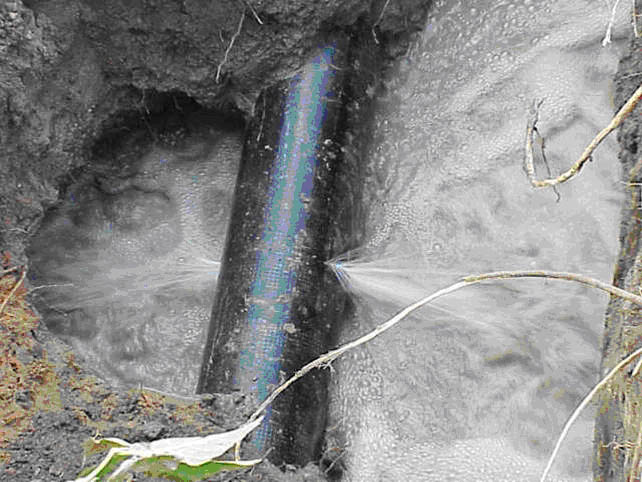
“If the jury concludes that the house was not ‘unoccupied’ at the time of the loss, the occupancy exclusion will not apply and plaintiffs would be entitled to recover the value of their contents under Coverage C. If, however, the jury were to find that the house was ‘unoccupied’, the burden would shift to plaintiffs to show that they used reasonable care to maintain heat in the house. Since the Court has already concluded that plaintiffs did not use reasonable care to maintain heat, the exclusion would apply and plaintiff could not recover the value of their contents under Coverage C of the Policy.”

Joseph Jugan, et al. v. Economy Premier Assurance Co., No. 15-4272, E.D. Pa.; 2016 U.S. Dist. LEXIS 87876

Motion for JOP Denied In Water Damage Coverage Dispute

vacant

HARRISBURG, July 8  — A Pennsylvania federal judge declined to grant an insurer’s motion for judgment on the pleadings  in a homeowner’s coverage suit involving water damage, finding that genuine issues of fact existed as to whether  exclusions for defective construction, seepage, neglect or known loss applied to the loss.

Jonathan and Deborah Drenocky filed an insurance claim with their homeowners insurer, The Cincinnati Insurance Co., for water damage to their home.  The Drenocky’s suit against the contractor for defective construction was terminated due to the construction company’s bankruptcy.  During window replacement in the fall of 2013, additional damage was found behind the Drenocky’s stucco walls.  A construction expert hired by the insureds opined that there was the lack of a vapor barrier, allowing water seepage around windows and doors.
After the Drenockys filed a claim with their homeowners’ insurer, Cincinatti Insurance Co., the insurer  denied the claim in October of 2013.  Cincinnati’s construction inspector, Brent Leisenring, P.E., found that the water damage  resulted from improper window installation.
In 2015, Cincinnati sued its insureds in the U.S. District Court for the Middle District of Pennsylvania, seeking a declaratory judgment that it owed no coverage to  the Drenockys. Cincinnati argued that a defective construction exclusion applied, as did a the seepage exclusion, the known loss doctrine, the policy’s coverage period , the neglect exclusion and the concealment and fraud exclusion.

U.S. District Judge Christopher Connor denied Cincinnati’s motion for partial judgment on the pleadings.  The Court held that the cause and specific time of manifestation of the water damage were both material and disputed. The judge cited to conflicting versions of the cause of the loss, and ruled that these conflicts precluded decision on the coverage exclusions.Cincinnati also claimed Mr. Drenocky falsely testified during an examination under oath, but Connor also decided that issue, including the intentional nature of the inaccurate statements under oath,  should proceed  also:

“Considering the multitude of projects at the house, the complexity of the underlying damage, and the passage of time, a reasonable jury could determine that Drenocky simply forgot about the MacKinney letter during his examination under oath. Accordingly, the court must deny Cincinnati’s request for judgment pursuant to the intentional concealment clause at this juncture. The fraud and concealment exclusion contains a second relevant prong. The false statement clause purports to bar coverage if an insured makes a false statement, irrespective of the insured’s state of mind.”

The Cincinnati Insurance Co. v. Jonathan Drenocky and Deborah Drenocky, No. 15-762, M.D. Pa.; 2016 U.S. Dist. LEXIS 87711

Computer Fraud Losses Barred By “Authorized Representative” Exclusion

cyber-liability

PASADENA, June 28 — The Ninth Circuit U.S. Court of Appeals affirmed summary judgment for Great American Insurance Co., holding that the relevant policy’s “authorized representative” exclusion barred coverage of $100,000 in losses to Southern California Counseling Center  arising out of computer fraud by one of the Center’s payroll agencies.

The Southern California Counseling Center (SCCC) sued its insurer Great American Insurance Co. (GAIC) for breach of contract and bad faith, alleging  $100,000 in losses after a payroll company withdrew funds from SCCC’s bank accounts and used them instead of paying SCCC’s federal and state payroll tax obligations.  SCCC sought a declaratory judgment that Great American had a duty to cover the underlying losses arising out of computer fraud.

On June 17, 2014, U.S.District  Judge Audrey B. Collins granted summary judgment for Great American, holding that a policy provision excluding coverage for losses caused by “authorized representatives” applied to the misconduct of SCCC’s payroll services agent Ben Franklin Payroll Service .

The Ninth U.S. Circuit Court of appeals  affirmed the District Court’s ruling in favor of the insurer,  holding:

the plain meaning of the “authorized representative” language [here] . . . is not ambiguous and covers those who by authorization of the insured are given access to and permitted to handle the insured’s funds. . . This understanding comports with the function of the provision within the policy: to place the onus of vetting the individuals and entities whom the insured engages to stand in its shoes — and thus the risk of loss stemming from their conduct — squarely on the insured. In other words, the term ‘authorized representative’ is ‘a straightforward effort to embrace all statuses that are “authorized,” and thus are the insured’s responsibility to supervise…’”

“SCCC executed multiple agreements with Ben Franklin Payroll Service and/or its principal, Richard Zakarian, to allow the latter party or parties to provide payroll services…In doing so, SCCC gave them direct access to its bank account and permission to file tax documents on its behalf. These agreements used the word ‘authorize’ numerous times; indeed, it is difficult to imagine contracts that could more explicitly ‘authorize’ a ‘representative’ to act on one’s behalf. Under these circumstances, the district court did not err in concluding that the only reasonable construction of the term ‘authorized representative’ encompasses Ben Franklin Payroll Service and/or Zakarian, and, as a result, the exclusion unambiguously applies.”

Southern California Counseling Center v. Great Am. Ins. Co., (9th  Cir., 2016)

Cincinnati Insurance Owes Indemnity For Contractor’s Negligence

construction

PITTSBURGH, June 13  — An insurer must indemnify  its contractor and pay for a  homeowner’s recovery of $174,553.04 for defectively installed structural panels, a federal judge in the Western District of Pa. has ruled.

Gary Gadley hired Jerry Ellis Construction  to build a timber home made from Thermocore Structural Insulated Panel Systems SIPs. In 2011, Gadley bought the panels directly from Thermocore for use in his roof.

Gadley  claimed that Ellis was negligent in installing the SIP’s out of sequence and in violation of manufacture guidelines and specifications, sued Ellis for the error, and sought damages relating to repair and reconstruction.  In the underlying case, Ellis’ insurer, Cincinnati Insurance Co.,  defended Ellis subject under a reservation of rights.

Gadley won a verdict in the underlying case.  Specifically, the jury found that Ellis did not breach its contract with Gadley to install the SIPs. The jury found that while  Ellis did not breach his construction contract, he instead  breached expressed and implied warranties made to Gadley about the proper installation of the SIP’s.   Gadley was awarded $108,000 in damages for Ellis’ breach of the express and implied warranties reduced by nearly a third based on the jury’s finding that Gadley did not fully mitigate his damages.

Cincinnati sued Ellis and Gadley seeding a declaration of no coverage, and in that case moved for summary judgment.  They argued that the policy provided indemnity only for property damage caused by an occurrence, and that coverage was also excluded by a “damage to your own work exclusion.”  Gadley argued that this exclusion only applied to $25,000.00 of the verdict specifically allocated to damage to the SIP’s themselves.

U.S. District Judge Kim R. Gibson denied the motion for summary judgment,  pplying Indiana law to find that Ellis’ errors were not intentional and therefore, they were a covered “occurrence” under the policy:

“Because the jury determined that Jerry Ellis Construction did not engage in intentional or reckless conduct, the Court declined to grant Gadley’s request for treble damages. Instead, the Court doubled the damages that the jury awarded to Gadley. In applying the jury’s verdict in the underlying action to the instant matter, the Court cannot conclude that the Ellis Defendants’ faulty workmanship was intentional. Rather, the faulty workmanship was ‘unexpected’ and ‘without intention or design.’ The Ellis Defendants’ faulty workmanship therefore constitutes an ‘accident’ that is covered by the Policy.”

Judge Gibson also ruled that damages under Pennsylvania’s Unfair Trade Practices and Consumer Protection law were also covered:

“Plaintiff does not cite any provisions of the Policy to support its argument that Gadley’s UTPCPL damages are excluded. Rather, Plaintiff only argues that the Policy does not provide coverage for Gadley’s UTPCPL damages because the ‘property damage’ that Gadley sustained is not covered by the Policy. As discussed above, the Ellis Defendants’ faulty workmanship constitutes an ‘accident’ that is covered by the Policy. Accordingly, because the damages awarded to Gadley are not excluded by the Policy and are below the Policy’s limits, Plaintiff must indemnify the Ellis Defendants.”

Cincinnati Ins. Co. v. Jerry Ellis Construction  (W.D. Pa.., June 9 2016)


Life Insurer Did Not Act In Bad Faith In Interpleader

life insurance

HARRISBURG, Pa., June 24 —  A federal judge in Pennsylvania has ruled that the  executrix of an estate failed to establish a right to relief for a life insurer’s alleged bad faith in denying her claim for benefits under a policy of life insurance.

MONY issued Steve Eckert a life insurance policy with a death benefit of $127,000.  His wife at the time, Carol, was named the beneficiary.  In 1989, however, The Eckerts divorced, but Steve Eckert failed to remove his ex wife as the beneficiary.   Eckert remarried to Pamela Eckert in 2006.

Eckert died, and the beneficiary was never changed.  MONY filed an interpleader complaint in the U.S. District Court for the Middle District of Pennsylvania, seeking to pay the proceeds into court.  Eckert’s current wife, Pamela, and former wife, Carol,  both filed answers and crossclaims.  Pamela also filed a bad faith claim against MONY, and a claim alleging violation of the Pennsylvania Unfair Insurance Practices Act.

MONY moved to dismiss the three counterclaims filed by Pamela Eckert.  District Judge William W. Caldwell denied the motion in part, but ordered breach of fiduciary duty and bad faith claims dismissed.  Pamela Eckert filed an amended answer, again alleging bad faith, and MONY again filed a motion to dismiss.

Judge Caldwell dismissed the bad faith claims again, finding that aside from her allegation that MONY denied her the policy proceeds, Pamela’s pleading did not support a bad faith claims since it was “wholly unconnected to a denial of benefits.”  He wrote:

“Subparagraphs (a), (d), (e) and (f) [of Eckert’s opposition brief], relate to a transfer of ownership, not to a denial of benefits. Even if they alleged actionable conduct (and we express no opinion on that matter), this conduct could not be understood to bear on a claim for policy proceeds. In other words, Eckert may be correct (at least in this case) that a transfer of ownership led to a denial of (or at least a dispute about) her claim for the proceeds of the policy, but the fact that an insurer’s conduct leads to a transfer of ownership does not mean it gives rise to a claim for denial of benefits after that transfer has been made. As judicially construed, section 8371 covers bad faith in denial of benefits, not bad faith in the transfer of ownership in a policy. Section 8371 does not reach the latter conduct.”

MONY Life Insurance Co. v. Carol Snyder, f/k/a Carol Eckert, and Pamela Eckert, No. 15-2109, M.D. Pa.; 2016 U.S. Dist. LEXIS 34371)(Caldwell, J.).


Bad Faith Claims Dismissed in Household, Regular Use Exclusion Case

auto-accident-1

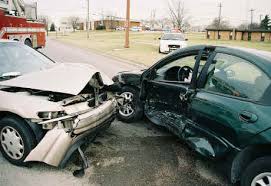
SCRANTON, June 13 — A federal judge in Pennsylvania has dismissed a number of breach of contract and bad faith claims, arising out of an auto  insurance claim which the judge said was potentially barred by the policy’s household or regular use exclusions.

According to the opinion written by U.S. District Judge Richard P. Conaboy, Plaintiff Richard Myerski was involved in a car  accident with an uninsured driver while Myerski was driving his mother’s car, which was insured through First Acceptance Insurance Co. Inc.  Myerski was neither a named insured nor a member of his mother’s household at the time of the accident.

First Acceptance denied a claim for benefits with First Acceptance made by Myerski’s mother, however, contending that Myerski lived with Morris at the time of the accident, even though the police report listed Myerski at a different residence address.  Myerski told the insurer he lived with his mother and drove the car “all the time.”

Myerski sued First Acceptance in the Lackawanna County, Pa., Court of Common Pleas, for breach of contract, bad faith, and  breach of the covenant of good faith and fair dealing, in addition to breach of contract and negligence claims.  The case was removed to the U.S. District Court for the Middle District of Pennsylvania and First Acceptance moved to dismiss good faith and fair dealing, bad faith, negligence and vicarious liability claims.

In granting the motion, Judge Conaboy held that dismissal of the bad faith claims were appropriate:

“[t]he facts alleged show that Defendants reasonably denied the claim for damage to the insured’s vehicle based on the policy exclusion: Plaintiff himself stated that he lived with his mother and drove the vehicle ‘all the time’…Even if there is evidence which could support a claim that Plaintiff mistakenly made the August 25, 2015, statement about his residence, Plaintiff does not point to evidence undermining his statement that he used the car ‘all the time,’ usage which would fall under the ‘regular or frequent operator’ exclusion. In fact, Plaintiff does not assert that this exclusion does not apply. Importantly, Defendants’ August 25, 2015, correspondence to Ms. Morris indicates there is no coverage for damage to her auto based on the exclusion set out above — it does not limit the application of the exclusion to Plaintiff’s place of residence. Given the admissions in Plaintiff’s statement and the basis for denial identified in Defendants’ August 25, 2015, correspondence, Plaintiff’s assertion that bad faith is evidenced by Defendants’ failure to properly investigate Plaintiff’s residence is not an accurate assessment of the bases upon which the exclusion may apply in this case. It follows that Defendants’ alleged refusal to further investigate Plaintiff’s residence and failure to pay for damage to Ms. Morris’ auto cannot be considered ‘frivolous or unfounded’ refusals.”

Judge Conaboy further wrote:

“Given the lack of factual support in the record supporting Plaintiff’s assertion of PIP [personal injury protection] and UM [underinsured motorist] claims at the early stage of the claims handling process, the fact that there is no evidence that Plaintiff sought clarification regarding PIP and UM coverage following the call where [First Acceptance claims adjuster Beverly] Bowers allegedly denied all claims, and the fact that the Police Report states that no one was injured and the other vehicle was insured, the ‘clear and convincing evidence’ that Defendants acted in bad faith on the basis of Ms. Morris’ conversation with Ms. Bowers is lacking. Thus, I conclude the record does not provide the evidentiary requirements for establishing a bad faith claim during the initial period and Plaintiff’s statutory bad faith claim is properly dismissed.”

The Judge permitted breach of contract and statutory claims under the Pa.M.V.F.R.L to proceed, and permitted the Plaintiff an opportunity to amend the bad faith allegations, though recognizing that doing so would likely be “futile.”

 Myerski v. First Acceptance Ins. Co., (M.D. Pa. June 1, 2016, Conaboy, J.)


Post-Litigation Claims Documents Not Discoverable, Court Rules

discovery

OAKLAND, May 31 – A California federal district magistrate has shielded from discovery  information in its insurer’s file generated after  the filing of coverage litigation.

Magma, a technology company,  sought coverage for underlying securities litigation from Genesis, which had written Magma’s excess  directors and officers insurers coverage.  Magma requested discovery of its excess insurer’s “claims handling information.” After Genesis provided information up to but not following the date of the coverage suit against it, Magma requested  the excess insurer’s file for the period following the beginning of the coverage litigation, including information about the excess insurer’s reinsurance and reserves.

Magma argued that Genesis’ duty of good faith and fair dealing continued even after coverage litigation commences, and on that basis argued the post litigation claims documents were discoverable .

White and the cases that followed it concerned whether an insured’s bad faith claim could be based on evidence of an insurer’s conduct during coverage litigation — but in all of those cases, the conduct at issue was already known to the insured. In Magma, by contrast, the insured technology company was seeking discovery of information unknown to it, contained within the excess insurer’s own internal files.

District Magistrate Howard R. Lloyd wrote that the possibility of post litigation bad faith conduct was not sufficient grounds to make the post-litigation information discoverable.  Lloyd called the company’s discovery request on that basis speculative, and without more, a “fishing expedition into the heart of the insurer’s litigation strategy. . . the insurer has an absolute right to defend against the insured’s claims, and opening up its litigation file to its insured would undermine its fair day in court.”

Judge Lloyd ruled, that the work product privilege of  Federal Rule of Civil Procedure 26(b)(3)(A) protected the information.

Genesis Insurance Company v. Magma Design Automation, Inc. No. 5:06-cv-05526, (N.D. Cal. May 31, 2016)

Washington: No Water Damage Coverage For Unoccupied Building

vacant.jpg

WASHINGTON, June 9 – The Supreme Court of the state of Washington has ruled that there is no coverage under a property insurance policy for water damage to a vacant building, rejecting  the policyholder’s claims that provisions relating to vacancy and building occupation were ambiguous.

Essex Insurance Company issued a property insurance policy to Kat Suen and May Far Lui . The insureds had evicted the building tenant, but did not provide notice to Essex that the building was no longer occupied.  Subsequently, water damage was caused on the property after a a sprinkler pipe froze and burst.

After issuing  payments totaling $293,598.05, Essex discovered that the building had been unoccupied for almost 60 days at the time of the loss. Essex sent a denial letter to the Luis, referencing a policy provision which suspended coverage when the insured property was vacant or unoccupied.

Essex offered the Luis not to recoup the $293,598.05 paid if the Luis waived additional payment on the claim, which the Luis contended was  $758,863.31 in total.  The Luis declined, and sued Essex to recover the full claimed amount plus bad faith damages. In doing so, they claimed that the vacancy exclusion did not apply because the property was not vacant for  60 consecutive days.  That was not disputed by either side.

The trial court denied Essex’s summary judgment motion but an appeals court reversed.  In a unanimous opinion, the Washington Supreme Court affirmed an appeals court’s finding of no coverage, and held that a typical insured would understand that the policy in question substantially limited coverage from the first day an insured structure became vacant, and suspended coverage altogether if the building stays vacant for 60 days, calling the language plain and unambiguous.  The Court further found that water damage was a coverage which was restricted after the first day the insured building became vacant, concluding therefore that  there was no coverage for the water damage.

The Supreme Court rejected the insured’s argument that the vacancy provisions of the policy were vague and ambiguous, finding that such arguments ignored the plain meaning of the provisions and would create an unresolvable contradiction between the vacancy provisions which, in the opinion of the Court, simply did not exist.

Lui v. Essess Ins. Co., (Wash. June 9, 2016)Lui v. Essex Ins. Co., (Wash. June 9, 2016)