
CJ Haddick | 717-731-4800 | chaddick@dmclaw.com
Category: Pennsylvania
Haddick Among Forty-Four DMC Lawyers Recognized as Best Lawyers Award Recipients

August 17, 2023 — Dickie, McCamey & Chilcote, P.C. is pleased to announce that 44 lawyers have been included in the 2024 edition of The Best Lawyers in America. Since it was first published in 1983, Best Lawyers has become universally regarded as the definitive guide to legal excellence.
Attorney C.J. Haddick, Managing Director of the firm’s Harrisburg, Pa. office, was recognized in the field of Insurance Law.
“For more than 40 years, the rigorous methodology of Best Lawyers has ensured the integrity and esteem of our legal recognitions,” said Best Lawyers CEO Phillip Greer. “It is with great pleasure that we continue to provide potential clients with the pinnacle measurement of credibility through our Best Lawyers awards as they search for counsel.”
DMC Lawyers Haddick, Akrasi, Successfully Defend Insurance Agency From $15 Million Claim

Harrisburg, Aug. 8 – DMC Harrisburg Attorneys CJ Haddick and Charlene Akrasi successfully defended a western Pa. insurance brokerage from a $15 million professional liability claim in the U.S. District Court for the Middle District of Pa.
U.S. District Court Judge Matthew Brann granted summary judgment to DMC’s client, Ebensburg Insurance Agency, on claims made by American Builders Insurance Company alleging that Ebensburg was negligent and made misrepresentations in an application for workers compensation insurance prior to a catastrophic loss involving one of the applicant’s employees.
In American Builders Insurance Company v. Ebensburg Insurance Agency, et. al., the Court found that the insurer was aware of potential claims against the agency as early as 2015, within days of the accident involving the employee. While the insurer filed suit against the applicant/employer in 2017 in the Western District of Pa., it did not file suit against Ebensburg until 2019 in the Middle District of Pa., which was well beyond the two-year tort statute of limitations, the Court held.
In granting judgment in favor of Ebensburg, Judge Brann ruled that the Pennsylvania Borrowing Statute required application of the two-year Pennsylvania tort statute of limitations, not a longer limitations period under Georgia law. American Builders Insurance Company is headquartered in Georgia.
American Builders Ins. Co. v. Ebensburg Insurance Agency, Keystone Insurance Group, M.D. Pa. 2023 (Brann, J.)
Pa. Courts Continue To Limit What Constitutes An “Occurrence” Under CGL Policies: Defective Workmanship Claims

Pennsylvania Courts continue to interpret the scope of the term “occurrence” in the CGL policy narrowly. Recently, in Berkley Specialty Ins Co vs. Masterforce Construction Corporation, (3rd Circ., No. 21-1287, May 11, 2023), in a non-precedential opinion, the US Court of Appeals for the 3rd Circuit affirmed a judgment in favor of an insurer seeking a declaration that it did not owe its insured defense or indemnity for property damage claims arising out of a defective work product.
In Berkley, the insurer issued CGL policies to Masterforce in 2012 and 2013. The CGL policies limited coverage to property damage caused by an “occurrence”. The policies in question defined occurrence in part as “an accident including continuous or repeated exposure to substantially the same general, harmful conditions.”
Customers of Masterforce, the Brandts, brought claims against Berkley’s insured for faulty roof panel installation which caused property damage. The U.S. District Court for the Middle District of PA granted Berkley’s motion for summary judgment, finding that it did not owe a duty of defense or indemnity to Masterforce under a long line of Pennsylvania case law which holds that claims relating to faulty or defective workmanship do not constitute a fortuitous occurrence under the CGL policy.
In affirming the District Court’s ruling, the Third Circuit Court of Appeals provided a succinct yet comprehensive review of Pennsylvania case law beginning with Kvaerner Metals vs. Commercial Union Insurance Company and a line of case which followed and expanded upon Kvaerner.
The Appeals Court noted that claims for property damage arising out of defective or faulty workmanship were not fortuitous under the definition of “occurrence” because damage arising from faulty workmanship was foreseeable. The Court specifically rejected the Brandts’ argument that it should distinguish between damage to the work product performed by the contractor and damage to other property. The Court noted that this was a distinction without a difference, pointing to prior precedent, that property damage arising from faulty workmanship including damage to property other than the work itself was too foreseeable to be considered an accident.
While the Berkley Specialty opinion is non-precedential, the opinion itself contains citations to a number of precedential opinions which exclude claims of faulty workmanship from the definition of occurrence under the CGL policy, whether that workmanship caused damage to the work itself or to other property.
Insurers can and should continue to take advantage of the narrow definition of “occurrence” in CGL policies given it by Pennsylvania courts. For a copy of the Berkley Specialty opinion, or for additional information about how insurers can effectively handle defective workmanship claims and coverage disputes, contact me at chaddick@dmclaw.com or 717-731-4800.
Fear Not: Withdrawing A Defense Following Reservation Of Rights

I recently had an insured’s attorney tell me, with a straight face (I’m assuming it was straight — it was hard to tell on the phone) that the insurance company I represented on a coverage matter could not withdraw a defense to his client because, counsel claimed, the insurer had already agreed to provide a defense under a reservation of rights, and the insurer “can’t change its mind.”
In fairness, this claim can, under certain very limited circumstances, actually be true! But the set of circumstances under which it can be true is dwarfed by the set of circumstances under which it is likely not true. And so, without further delay, a quick refresher on how an insurer can properly and lawfully withdraw a defense after initially agreeing to provide one pursuant to a reservation of rights.
The majority of this post assumes that the defense which the insurer would like to withdraw is being provided pursuant to a reservation or rights. After all, why would an insurer reserve rights in the first place if it did not, on occasion, intend to lawfully exercise those rights? This post further assumes some development has occurred which justifies the insurer’s change in position. A common example of this is when covered counts in a complaint against an insured are dismissed from an action, leaving only claims which are not covered by the policy in question.
Reserving rights before a defense is withdrawn is the better practice by far. But there is some authority suggesting that a predicate reservation of the right to withdraw a defense is not strictly required in order to subsequently withdraw that defense if the circumstances justify it, and the insurer is not contractually obligated to defend or indemnify. See, e.g., Windt, Allan. 1 Insurance Claims and Disputes § 4:29 (6th ed.). The theory behind this proposition is that the insuring agreement either requires defense and indemnity or it does not. Did I mention, however, that reserving rights is the better practice by far? I did? Good.
Some insurers will ask from time to time whether a declaratory judgment action should be filed in a given case in order to properly withdraw a defense. Generally, and in Pennsylvania, for example, a declaratory judgment action is not a prerequisite to withdrawing a defense. See, Selective Way Ins. Co. v. Hosp. Grp. Servs., Inc., 2015 Pa. Super. 146, 119 A.3d 1035, 1052 (2015). While doing so may be advisable in certain cases, it is not a black letter requirement. (I recently addressed the subject of when and why to file declaratory judgment actions here).
So how is withdrawal done in a way to avoid or minimize both the hassle, and the cost and expense of not doing so properly? Here are a few important basics.
The Golden Rule
“Thou Shalt Not Prejudice The Insured.”
The Golden Rule of Withdrawing A Defense
Everybody knows, or should know, this one. It is the Alpha and the Omega of deciding whether, when, and how to withdraw a defense which had been provided under a reservation of rights. A few observations are, however, in order.
Prejudice must most often be actual and demonstrable — there must be some harm occasioned to the insured which would make withdrawing improper. And in the vast majority of cases, claims of prejudice are tied to when in a civil proceeding the defense is withdrawn. A simple guideline: the later in a case a defense is withdrawn, the bigger the risk of prejudice to the insured, and the more dangerous a withdrawal can be for the insurer.
The underlying case may reach a point of such progress, however, that prejudice will be presumed, and an insurer will be estopped from withdrawing a defense. The clearest example of this is an insurer’s attempt to withdraw a defense after it has defended the insured to verdict. This, to use a legal term, is a “big no-no,” and my eloquent legal advice on this subject is, “don’t do that.” See, e.g., Treadways LLC v. Travelers Indem. Co., 467 Fed. Appx, 143, 148 (3d Cir. 2012).
There are several miscellaneous points to make as part of the prejudice discussion. First, the naked claim that an insured is prejudiced by a withdrawal of a defense because it must now pay for its own defense is not sufficient justification to prevent an insurer from withdrawing. This is no more a justification to obligate an insurer to defend than is the reverse claim by the insurer to relieve itself of the duty to defend. Legal fees are not sufficient justification in and of themselves to carry the day, for the insured or the insurer.
A second lesser, but still important, point is that insurers can reduce their exposure to prejudice claims after deciding to withdraw a defense by assisting the insured with a soft landing and transition. An insurer can offer to make insurance defense counsel available, at the insurer’s expense, to the insured’s personal counsel for a window of 30 to 45 days, for example, to assist personal counsel with the assumption of the insured’s defense. It can also and should also ensure that the insured’s litigation file, electronic and/or hard copy is properly transferred to new counsel. Nothing, I advise insurers, evaporates prejudice claims better than actively working to prevent even the appearance of prejudice after the decision to withdraw.
There can never be any guarantees that insurers won’t face claims of “you can’t change your mind” by disgruntled insureds, or their lawyers, once the decision to withdraw a defense has been taken. However, as one Court has observed, “There is no principle of Pennsylvania law that the duty to defend automatically attaches at the outset of the litigation and cannot afterwards terminate.” Com. Union Ins. Co. v. Pittsburgh Corning Corp., 789 F.2d 214, 217–18 (3d Cir. 1986).
Withdrawing a defense following a reservation of rights can be done without adverse consequence or penalty. It just has to be done properly.
Covid-19 Business Interruption Insurance Coverage Update

I recently sat down with Bob Oltmanns of the DMC Report to discuss recent developments in Pennsylvania and nationally regarding Covid-19 business interruption insurance coverage claims. Soundcloud link provided below.
Failure To Comply With Pa.M.V.F.R.L. Renewal Notice Requirements Not Bad Faith, Pa. Federal Judge Rules
Pittsburgh, July 12th. A federal judge in the Western District of Pennsylvania recently granted summary Judgment to an auto insurer in a coverage and bad faith case, ruling that in the presence of a valid UM/UIM rejection by the insured, subsequent non-compliance with the renewal notice requirements of the Pa.M.V.F.R.L. neither provided the basis for policy reformation, nor a bad faith claim.
In a ruling by Magistrate Judge Kelly, adopted by Judge Hornak, the court found that the insurer’s failure to include a proper renewal notice regarding the rejection of UIM coverage was a violation of the MVFRL. It also found, however that such violations do not allow private civil remedy, beyond administrative review, and such a violation could neither form the basis of reformation of the policy, or of a bad faith cause of action
The court also found that since there had been a prior valid rejection of UM/UIM coverage by the insured, the claims adjuster’s denial of a claim for such benefits was objectively reasonable.
Keeler v. Esurance, U.S. District Court Western District of Pennsylvania No. 20-271 (W.D.Pa. July 12, 2021) (Kelly, M.J.) Link: https://www.govinfo.gov/app/details/USCOURTS-pawd-2_20-cv-00271/USCOURTS-pawd-2_20-cv-00271-0
Pa. Supreme Court Holds Household Exclusion Unenforceable In Auto Policy With Stacked UM/UIM Benefits
Pittsburgh, Jan. 23 – The Pennsylvania Supreme Court has ruled that a household exclusion in an auto insurance policy was unenforceable because it impermissibly took stacked UM/UIM benefits away from the insured in violation of the Pa. Motor Vehicle Financial Responsibility Law (Pa.M.V.F.R.L.).
In Gallagher v. Geico Indem. Co., the Pa. Supreme Court reversed both trial court and the Pa. Superior Court’s grant of Summary Judgment to Geico, in a case where Geico sought to disallow $200,000 in stacked UM/UIM benefits in an automobile policy covering two vehicles owned by the insured, Gallagher. Gallagher also had a separate motorcycle policy with UM/UIM limits of $50,000.00, also issued by Geico.
Gallagher was injured in an August 12, 2012 motorcycle accident, and was paid by both the tortfeasor, and by Geico in the amount of $50,000.00 which was the UM/UIM limit under the motorcycle policy. Gallagher sought the additional $200,000.00 in stacked UM/UIM coverage under the auto policy, but Geico denied that claim on the grounds that the auto policy contained a household vehicle exclusion, which provided:
“This coverage does not apply to bodily injury while occupying or from being struck by a vehicle owned or leased by you or a relative that is not insured for Underinsured Motorists Coverage under this policy.”
Gallagher filed suit against Geico, claiming that Geico placed Gallagher’s motorcycle and automobiles on separate policies, and that he paid for the stacked UM/UIM benefits under his auto policy.
Geico won summary judgment in the Westmoreland County Court of Common Pleas based on the exclusion, and the Superior Court affirmed. On appeal to the state Supreme Court, however, the court, per Justice Baer, reversed in a 5-2 ruling, holding that the household exclusion violated section 1738(b) of the Pa.M.V.F.R.L., which requires that stacked UM/UIM benefits be waived in writing. Justice Baer wrote that Gallagher did not waive stacking under his auto policy, and that he was entitled to those benefits, thereby barring application of the household vehicle exclusion. Of the exclusion, Justice Baer wrote:
“This policy provision, buried in an amendment, is inconsistent with the unambiguous requirements Section 1738 of the MVFRL under the facts of this case insomuch as it acts as a de facto waiver of stacked UIM coverage provided for in the MVFRL, despite the indisputable reality that Gallagher did not sign the statutorily-prescribed UIM coverage waiver form. Instead, Gallagher decided to purchase stacked UM/UIM coverage under both of his policies, and he paid GEICO premiums commensurate with that decision. He simply never chose to waive formally stacking as is plainly required by the MVFRL.”
The Court therefore reversed and remanded the Superior Court ruling, sending the case back to the trial court for further proceedings.
Justice Wecht filed a dissenting opinion, in which he criticized the majority for conflating the stacking waiver provisions of section 1738 with the entirely separate question operation of a policy exclusion, arguing that nothing in the Pa.M.V.F.R.L. precluded the valid operation of the household vehicle exclusion. Justice Wecht also warned against the dangerous implication of the majority ruling, and the use of section 1738 to invalidate all UM/UIM exclusions, essentially allowing a waiver provision to trump the terms and conditions of the policy language.
Finally, Justice Wecht wrote that the majority decision violated earlier state Supreme Court precedent in Erie Exchange v. Baker, 601 Pa. 355, 972 A.2d 507, in which the Court made a clear distinction between the primacy of the nature, scope, and extent of UM/UIM coverage as set down in an insurance policy (and its limitations and exclusions), and the secondary consideration of whether coverage, if not otherwise limited or excluded, should be stacked, unstacked or waived.
Gallagher v. Geico, 2019 Pa. LEXIS 345 (January 23, 2019, Baer, J.)
State Auto Had Reasonable Basis To Deny Pipe Burst Claim, Federal Court Rules; Contract and Bad Faith Claims Dismissed
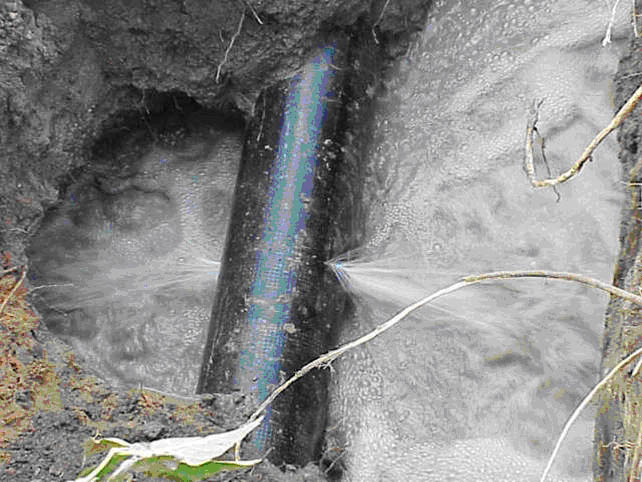
PITTSBURGH, Oct. 11 – A federal judge has ruled that State Auto Insurance Company was entitled to summary judgment on breach of contract and bad faith claims arising out of a water loss because the insureds violated a continuous occupation provision contained in their homeowners policy.
In Gerow v. State Auto, U.S. District Judge Kim Gibson found that State Auto was not liable to pay the water loss claim, and it could also therefore not be liable for acting in bad faith toward the insured plaintiffs in the case. The case was originally filed in Pa. state court but removed to the U.S. District Court for the Western District of Pa.
On January 16, 2016, the Gerows suffered a pipe burst water loss at the insured premises, insured by State Auto. State Auto denied the claim, however, pursuant to an investigation which determined that the house in question was not occupied at the time of the loss, in violation of the terms of subject homeowners policy which required continuous occupancy. After State Auto denied the claim, the insureds filed breach of contract and bad faith claims against the insurer. After the case was removed to federal court, the parties filed cross motions for summary judgment as to both claims.
Judge Gibson found that the insureds did not meet the continuous residency condition of the policy, and that State Auto had not waived the provision. He therefore granted summary judgment on the coverage claim to State Auto.
The insureds argued they could still maintain a bad faith action against the insurer however, claiming that State Auto erroneously advised them to seek water remediation and then denied coverage, and failed to inform them that they were not complying with the residency requirement.
Judge Gibson dismissed these arguments, however, after employing the traditional Pennsylvania two part bad faith test — whether the insurer’s position lacked a reasonable basis, and whether it knew or recklessly disregarded the lack of basis. Judge Gibson wrote that State Auto:
“clearly had a reasonable basis for denying coverage for the Subject Loss: the Policy required Plaintiffs to reside at the Subject Property, and Defendant concluded, after an investigation, that Plaintiffs did not reside there, a conclusion with which this Court agrees…[Therefore, State Auto] could not have known or recklessly disregarded a lack of reasonable basis.”
Judge Gibson also relied in part on a prior Western District ruling which precluded a bad faith claim from proceeding when a lack of coverage was found.
Bad Faith Claims Against Individual Claims Adjuster Arising Out of UM/UIM Claim Dismissed By Federal Judge
PHILADELPHIA, Aug. 9 – A bad faith action against an individual claims adjuster has been dismissed by a U.S. District Court Judge, who found that the joinder of the adjuster in a coverage and bad faith action arising out of a UM/UIM claim was done fraudulently to defeat federal removal jurisdiction.
In Reto v. Liberty Mutual Insurance, U.S. District Judge Timothy Savage denied Retos’ motion to remand the Retos’ case to state court after Liberty Mutual removed the case, contending that the joinder of Liberty Mutual adjuster Stephania DeRosa was fraudulent for the purposes of destroying federal diversity jurisdiction.
Judge Savage noted that Liberty met its burden in opposing the motion for remand:
“[the]removing party has a heavy burden of persuading a court that joinder is fraudulent….[however] the claims against [the claim representative] are wholly insubstantial and frivolous…there is no basis to support a contract [against the claims handler, and] only the principal [Liberty Mutual] may be held liable.”
Judge Savage ruled that the claim representative was only an agent, without a stand-alone contract with the insured. Finally, the Court held that the Pa. Bad Faith Statute did not apply to claims representatives, but rather only to insurers. Accordingly, Judge Savage dismissed Ms. DeRosa as a defendant, and denied the Retos’ motion to remand the case to state court.
Reto v. Liberty Mutual Insurance, U. S. District Court Eastern District of Pennsylvania, CIVIL ACTION NO. 18-2483, 2018 U.S. Dist. LEXIS 133336 (E.D. Pa. Aug., 8, 2018) (Savage, J.)
 badfaithadvisor.com