Cincinnati Insurance Owes Indemnity For Contractor’s Negligence

construction

PITTSBURGH, June 13  — An insurer must indemnify  its contractor and pay for a  homeowner’s recovery of $174,553.04 for defectively installed structural panels, a federal judge in the Western District of Pa. has ruled.

Gary Gadley hired Jerry Ellis Construction  to build a timber home made from Thermocore Structural Insulated Panel Systems SIPs. In 2011, Gadley bought the panels directly from Thermocore for use in his roof.

Gadley  claimed that Ellis was negligent in installing the SIP’s out of sequence and in violation of manufacture guidelines and specifications, sued Ellis for the error, and sought damages relating to repair and reconstruction.  In the underlying case, Ellis’ insurer, Cincinnati Insurance Co.,  defended Ellis subject under a reservation of rights.

Gadley won a verdict in the underlying case.  Specifically, the jury found that Ellis did not breach its contract with Gadley to install the SIPs. The jury found that while  Ellis did not breach his construction contract, he instead  breached expressed and implied warranties made to Gadley about the proper installation of the SIP’s.   Gadley was awarded $108,000 in damages for Ellis’ breach of the express and implied warranties reduced by nearly a third based on the jury’s finding that Gadley did not fully mitigate his damages.

Cincinnati sued Ellis and Gadley seeding a declaration of no coverage, and in that case moved for summary judgment.  They argued that the policy provided indemnity only for property damage caused by an occurrence, and that coverage was also excluded by a “damage to your own work exclusion.”  Gadley argued that this exclusion only applied to $25,000.00 of the verdict specifically allocated to damage to the SIP’s themselves.

U.S. District Judge Kim R. Gibson denied the motion for summary judgment,  pplying Indiana law to find that Ellis’ errors were not intentional and therefore, they were a covered “occurrence” under the policy:

“Because the jury determined that Jerry Ellis Construction did not engage in intentional or reckless conduct, the Court declined to grant Gadley’s request for treble damages. Instead, the Court doubled the damages that the jury awarded to Gadley. In applying the jury’s verdict in the underlying action to the instant matter, the Court cannot conclude that the Ellis Defendants’ faulty workmanship was intentional. Rather, the faulty workmanship was ‘unexpected’ and ‘without intention or design.’ The Ellis Defendants’ faulty workmanship therefore constitutes an ‘accident’ that is covered by the Policy.”

Judge Gibson also ruled that damages under Pennsylvania’s Unfair Trade Practices and Consumer Protection law were also covered:

“Plaintiff does not cite any provisions of the Policy to support its argument that Gadley’s UTPCPL damages are excluded. Rather, Plaintiff only argues that the Policy does not provide coverage for Gadley’s UTPCPL damages because the ‘property damage’ that Gadley sustained is not covered by the Policy. As discussed above, the Ellis Defendants’ faulty workmanship constitutes an ‘accident’ that is covered by the Policy. Accordingly, because the damages awarded to Gadley are not excluded by the Policy and are below the Policy’s limits, Plaintiff must indemnify the Ellis Defendants.”

Cincinnati Ins. Co. v. Jerry Ellis Construction  (W.D. Pa.., June 9 2016)

 

Life Insurer Did Not Act In Bad Faith In Interpleader

life insurance

HARRISBURG, Pa., June 24 —  A federal judge in Pennsylvania has ruled that the  executrix of an estate failed to establish a right to relief for a life insurer’s alleged bad faith in denying her claim for benefits under a policy of life insurance.

MONY issued Steve Eckert a life insurance policy with a death benefit of $127,000.  His wife at the time, Carol, was named the beneficiary.  In 1989, however, The Eckerts divorced, but Steve Eckert failed to remove his ex wife as the beneficiary.   Eckert remarried to Pamela Eckert in 2006.

Eckert died, and the beneficiary was never changed.  MONY filed an interpleader complaint in the U.S. District Court for the Middle District of Pennsylvania, seeking to pay the proceeds into court.  Eckert’s current wife, Pamela, and former wife, Carol,  both filed answers and crossclaims.  Pamela also filed a bad faith claim against MONY, and a claim alleging violation of the Pennsylvania Unfair Insurance Practices Act.

MONY moved to dismiss the three counterclaims filed by Pamela Eckert.  District Judge William W. Caldwell denied the motion in part, but ordered breach of fiduciary duty and bad faith claims dismissed.  Pamela Eckert filed an amended answer, again alleging bad faith, and MONY again filed a motion to dismiss.

Judge Caldwell dismissed the bad faith claims again, finding that aside from her allegation that MONY denied her the policy proceeds, Pamela’s pleading did not support a bad faith claims since it was “wholly unconnected to a denial of benefits.”  He wrote:

“Subparagraphs (a), (d), (e) and (f) [of Eckert’s opposition brief], relate to a transfer of ownership, not to a denial of benefits. Even if they alleged actionable conduct (and we express no opinion on that matter), this conduct could not be understood to bear on a claim for policy proceeds. In other words, Eckert may be correct (at least in this case) that a transfer of ownership led to a denial of (or at least a dispute about) her claim for the proceeds of the policy, but the fact that an insurer’s conduct leads to a transfer of ownership does not mean it gives rise to a claim for denial of benefits after that transfer has been made. As judicially construed, section 8371 covers bad faith in denial of benefits, not bad faith in the transfer of ownership in a policy. Section 8371 does not reach the latter conduct.”

MONY Life Insurance Co. v. Carol Snyder, f/k/a Carol Eckert, and Pamela Eckert, No. 15-2109, M.D. Pa.; 2016 U.S. Dist. LEXIS 34371)(Caldwell, J.).


Bad Faith Claims Dismissed in Household, Regular Use Exclusion Case

auto-accident-1

SCRANTON, June 13 — A federal judge in Pennsylvania has dismissed a number of breach of contract and bad faith claims, arising out of an auto  insurance claim which the judge said was potentially barred by the policy’s household or regular use exclusions.

According to the opinion written by U.S. District Judge Richard P. Conaboy, Plaintiff Richard Myerski was involved in a car  accident with an uninsured driver while Myerski was driving his mother’s car, which was insured through First Acceptance Insurance Co. Inc.  Myerski was neither a named insured nor a member of his mother’s household at the time of the accident.

First Acceptance denied a claim for benefits with First Acceptance made by Myerski’s mother, however, contending that Myerski lived with Morris at the time of the accident, even though the police report listed Myerski at a different residence address.  Myerski told the insurer he lived with his mother and drove the car “all the time.”

Myerski sued First Acceptance in the Lackawanna County, Pa., Court of Common Pleas, for breach of contract, bad faith, and  breach of the covenant of good faith and fair dealing, in addition to breach of contract and negligence claims.  The case was removed to the U.S. District Court for the Middle District of Pennsylvania and First Acceptance moved to dismiss good faith and fair dealing, bad faith, negligence and vicarious liability claims.

In granting the motion, Judge Conaboy held that dismissal of the bad faith claims were appropriate:

“[t]he facts alleged show that Defendants reasonably denied the claim for damage to the insured’s vehicle based on the policy exclusion: Plaintiff himself stated that he lived with his mother and drove the vehicle ‘all the time’…Even if there is evidence which could support a claim that Plaintiff mistakenly made the August 25, 2015, statement about his residence, Plaintiff does not point to evidence undermining his statement that he used the car ‘all the time,’ usage which would fall under the ‘regular or frequent operator’ exclusion. In fact, Plaintiff does not assert that this exclusion does not apply. Importantly, Defendants’ August 25, 2015, correspondence to Ms. Morris indicates there is no coverage for damage to her auto based on the exclusion set out above — it does not limit the application of the exclusion to Plaintiff’s place of residence. Given the admissions in Plaintiff’s statement and the basis for denial identified in Defendants’ August 25, 2015, correspondence, Plaintiff’s assertion that bad faith is evidenced by Defendants’ failure to properly investigate Plaintiff’s residence is not an accurate assessment of the bases upon which the exclusion may apply in this case. It follows that Defendants’ alleged refusal to further investigate Plaintiff’s residence and failure to pay for damage to Ms. Morris’ auto cannot be considered ‘frivolous or unfounded’ refusals.”

Judge Conaboy further wrote:

“Given the lack of factual support in the record supporting Plaintiff’s assertion of PIP [personal injury protection] and UM [underinsured motorist] claims at the early stage of the claims handling process, the fact that there is no evidence that Plaintiff sought clarification regarding PIP and UM coverage following the call where [First Acceptance claims adjuster Beverly] Bowers allegedly denied all claims, and the fact that the Police Report states that no one was injured and the other vehicle was insured, the ‘clear and convincing evidence’ that Defendants acted in bad faith on the basis of Ms. Morris’ conversation with Ms. Bowers is lacking. Thus, I conclude the record does not provide the evidentiary requirements for establishing a bad faith claim during the initial period and Plaintiff’s statutory bad faith claim is properly dismissed.”

The Judge permitted breach of contract and statutory claims under the Pa.M.V.F.R.L to proceed, and permitted the Plaintiff an opportunity to amend the bad faith allegations, though recognizing that doing so would likely be “futile.”

 Myerski v. First Acceptance Ins. Co., (M.D. Pa. June 1, 2016, Conaboy, J.)


Pa.: State Farm Adequately Pled Chiropractor Billing Fraud

insurance-fraud

PHILADELPHIA, May 20 — A federal judge has denied a motion to dismiss State Farm Mutual Automobile Insurance Co.’s amended complaint of billing fraud against a chiropractic and physical therapy practice.  It ruled also that State Farm need not prove justifiable reliance on the bills at this stage of the case.

U.S. District  Judge J. Curtis Joyner of the Eastern District of Pennsylvania also found that State Farm’s  amended claims were both timely, and adequately alleged misrepresentation in the billing submitted by the defendants.

State Farm alleges that  Eastern Approach Rehabilitation LLC, Aquatic Therapy of Chinatown Inc., Leonard Stavropolskiy, P.T., D.C., and Joseph Wang, P.T., D.C., submitted false and fraudulent insurance claims on behalf the practice’s patients.  State Farm claims that the defendants  created a series of records for patients suffering from “moderate-to-severe joint dysfunctions, pain, and muscle spasms across multiple regions of the spine,”  and that these impressions from initial examinations were copied and pasted into subsequent treatment notes.  The amended complaint contends that planned treatments recorded in the notes were simply pre-determined, and not individually tailored to each patient.

State Farm also alleges claims that dating back to 2010, the practicioners took action to hide the nature of the fraudulent activity through the use of software to randomize and synonymize similar observations and diagnoses.  The amended complaint alleges that this conduct created the impression that diagnosis and treatment of patients was individualized when in fact it was not.

State Farm alleges damages in excess of $850,000.

On Feb. 17, Judge Joyner granted the motion to dismiss the original complaint,  but allowed State Farm to file an amended complaint.  He ruled that the amended complaint, however, sufficiently set forth misrepresentations allegedly made by the defendants, and that, at least at the pleading stage, the insurer need not show  justifiable reliance on the misrepresentations allegedly made in the billings.

State Farm Mutual Automobile Insurance Company v. Leonard Stavropolskiy, P.T., D.C., et al., No. 15-cv-5929, E.D. Pa.; 2016 U.S. Dist. LEXIS 65234

Bad Faith Allegations Too General, Dismissed Again In Pa. Federal Court

CSCC-Lawsuit-Dismissed

PHILADELPHIA, June 8 – A  federal magistrate judge in Philadelphia has found that overly broad bad faith allegations in a complaint filed against New Jersey Manuracturers Insurance Company should be dismissed.  The Court ruled that the insured plaintiff made only conclusory allegations insufficient to withstand the early challenge.

Mary Camp settled and auto accident claim with the tortfeasor’s insurer for $82,000, and then made a demand to her insurer, New Jersey Manufacturers Insurance Co. (NJMIC), for UIM benefits, seeking $221,412 for future medical treatment requirements.  NJMIC denied the claim, and Camp sued the insurer in the U.S. District Court for the Eastern District of Pennsylvania.  The complaint included claims for breach of contract and bad faith.

NJMIC filed a motion to dismiss the bad faith claims as insufficiently conclusory pursuant to F.R.C.P. 9.  NJMIC contended that the bad faith claims were simply  “a generic and non-specific reference to bad faith without enumerating any specific conduct of the defendant other than a disagreement over the value or amount of the claim.”

It was the second time Magistrate Judge Marilyn Heffley granted a motion to dismiss.  She earlier granted the same motion in March, but granted Camp leave to amend her complaint.  Camp’s amended complaint was not sufficiently different, according to Judge Heffley, with withstand dismissal.  In dismissing the similarly conclusory allegations, she wrote:

“The bad faith allegations in subsections (i) through (k) of paragraph 35 of the Amended Complaint remain unchanged from Camp’s original pleading. They include claims that NJMIC ‘engag[ed] in dilatory and abusive claims handling,’ ‘fail[ed] to adopt or implement reasonable standards in evaluating plaintiff’s claim,’ and ‘act[ed] unreasonably and unfairly in response to plaintiff’s claim.’ These allegations are devoid of factual specificity as to what claims handling practices were abusive or how NJMIC acted unreasonably. As the Third Circuit [U.S. Court of Appeals] ruled in Smith [Smith v. State Farm Mutual Automobile Insurance Co. (506 F. App’x 133, 136 [3d Cir. 2012])], without such details, a plaintiff has “fail[ed] to allege a legally sufficient cause of action for bad faith under [Pa. Consolidated Statutes] § 8371…

Alhough bad faith may be found where an insurer fails to communicate its reasons for denying a claim to an insured, in this case, according to the facts pled by Camp in her Amended Complaint, NJMIC actually did provide a reason for denying the claim. In paragraph 23 of the Amended Complaint, Camp alleges that in response to her submission for UIM coverage, NJMIC responded that it ‘[would] not be making a settlement offer as “it appears [Plaintiff] has been fairly compensated by the tort carrier for the injuries she sustained in the loss.”’ Thus, the facts alleged in the Amended Complaint clearly contradict the legal conclusion that Camp asks this Court to accept. Accordingly, Camp’s bad faith claim is insufficient to state a claim upon which relief can be granted.”

(Mary Camp v. New Jersey Manufacturers Insurance Co., No. 16-1087, E.D. Pa.; 2016 U.S. Dist. LEXIS 74496)

Allstate’s Denial of Water Leak Claim Reasonable, Court Rules

pipe%20leak%203

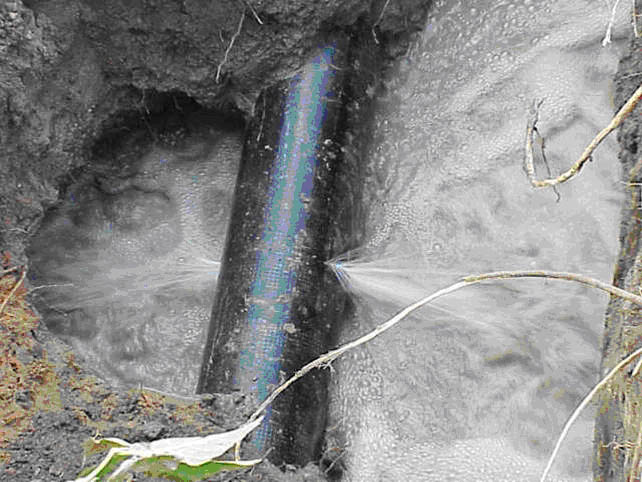
PHILADELPHIA, May 5  — A Pennsylvania federal judge on May 5 granted judgment in favor of an insurer in a water damage suit after determining that the company’s reliance on a maintenance exclusion to deny the claim was reasonable.

David Dougherty filed sued Allstate in state court for breach of contract and bad faith.   The suit was removed the U.S. District Court for the Eastern District of Pennsylvania on diversity jurisdiction grounds. Allstate denied Dougherty’s homeowner’s  water damage claim, contending that coverage was barred by the policy’s occupancy/heat exclusion and the planning, construction or maintenance exclusion.

The home was vacant and unoccupied at the time of the water loss, which occurred in winter weather.

Following cross motions for summary judgment Judge Thomas N. O’Neill Jr.held  Allstate met its burden in proving that it properly applied the policy’s maintenance exclusion in denying coverage. He held that the evidence presented

“supports a conclusion that the incident was caused by a failure to maintain the furnace at the property…On the record before me, viewed in the light most favorable to plaintiff, I find that a reasonable jury could not conclude that Allstate breached its obligation to plaintiff in applying the maintenance exclusion to bar plaintiff’s claim.”

Allstate’s summary judgment motion was also granted as to the bad faith claim.  The Judge held:

“It was not unreasonable for Allstate to focus its claim investigation on the condition of plaintiff’s furnace given that the water damage to the property occurred in January in Pennsylvania in an unoccupied property where the gauge on the oil tank read empty at the time of the loss (even though the gauge was later determined to be faulty.”

Dougherty v. Allstate Property And Casualty Insurance Company, (E.D. Pa. May 5, 2016, O’Neill, J.)

Pennsylvania Asbestos Reinsurance Dispute Stayed Under First Filed Rule

reinsurance

PHILADELPHIA, March 3 — A federal judge has granted a motion filed by R&Q Reinsurance Company to stay a reinsurance coverage suit filed by St. Paul Insurance arising out of more than $10 million in asbestos – related payments made by St. Paul on behalf of an insured.  St. Paul sought reimbursement  from R&Q pursuant to a reinsurance treaty with INA Reinsurance, to which R&Q has become a successor in interest.

The case  has now been stayed pending the outcome of a previous case filed by R&Q in United States District Court in Illinois in 2015. That case is captioned R&Q Reinsurance Company, f/k/a Ace American Reinsurance Company, f/k/a Cigna Reinsurance Company, f/k/a INA Reinsurance Company v. St. Paul Fire & Marine Insurance Company (No. 15-cv-07784, U.S.  N.D. Ill.).

U.S. District Judge Judge Joel H. Slomsky originally denied the motion to stay in the Pennsylvania action  on Dec. 18, but vacated that ruling as part of a decision he rendered on a motion to dismiss subsequently filed by R&Q in Pennsylvania .  R&Q sought dismissal or stay in Pennsylvania  pursuant to the first filed rule, citing to the Illinois litigation filed in 2015.

St. Paul had already filed and fully briefed a motion to transfer venue in the Illinois proceeding.  Judge Slomsky stayed the Pa. proceeding pending rulingson jurisdictional motions in the Illinois action.

St. Paul Fire and Marine Insurance Company v. R&Q Reinsurance Company, No. 15-cv-5528, E.D. Pa. March 3, 2016.


Judge Rules DWI Victims Adequately State Bad Faith Claim Against Progressive

PHILADELPHIA, Feb. 4 – U.S. District Judge Timothy J. Savage has denied a motion to dismiss filed by Progressive Insurance Company in response to a bad faith complaint filed by Progressive insureds Jeffrey and Aimee Kelly arising out of a UM/UIM claim.    The Court did dismiss, however, claims the Kellys made against progressive under the Pa. Unfair Trade Practices and Consumer Protection Law.

The Kellys were injured in 2010 when their vehicle was struck from behind by a drunk driver.  They settled with the drunk driver for the driver’s policy limits, and then filed a UM/UIM claim with their own carrier, Progressive.  Progressive denied the claim, and the Kelly’s filed suit.

The Judge stated succinctly:

The Kellys allege that Progressive failed to pay their claims, make a reasonable settlement offer, investigate their claims properly, and consider medical and other documentation. These allegations suffice to state a claim under § 8371… The insurance bad faith statute applies to post-contract formation conduct. The UTPCPL, on the other hand, applies to conduct surrounding  the insurer’s pre-formation conduct.  The UTPCPL applies to the sale of an insurance policy.  It does not apply to the handling of insurance claims.

Kelly v. Progressive Advanced Ins. Co., (E.D. Pa. Feb. 4, 2016)(Savage, J.)

Breach of Contract, Bad Faith Cases Dismissed In Pittsburgh

PITTSBURGH, Feb. 5 – Chief District Magistrate Judge Maureen Kelly has dismissed breach of contract and bad faith claims against State Farm by an insured contractor, finding that the underlying allegations of damage caused by the contractor fell outside of policy period.

Reginella Construction was insured under a contractor’s liability policy with State Farm between July 2004 and May 2006.  In 2013, a homeowner filed suit against Reginella complaining of problems with the floor, caused by poor materials and workmanship.  The homeowner subsequently won the underlying case against Reginella.  State Farm denied defense and indemnity to Reginella in February 2014, claiming that the occurrence per the suit against Reginella fell outside of the policy period(s).

After Reginella sued State Farm in Allegheny County, Pa. in 2015, State Farm removed the case to federal court and filed a motion to dismiss pursuant to F.R.C.P. 12(b)(6).

“Although the cause of the damages to the Eck home was arguably within the coverage period, ‘the cause of injury . . . has no special relevance to determining the date an insurance policy is triggered, unless specifically required by the language of the applicable policy of insurance.’ Where, as here, there is no policy language requiring the cause of injury to be identified, Pennsylvania courts apply the ‘first manifestation rule’ to occurrence policies; that is, the court looks to when injury is ‘reasonably apparent,’ i.e., when it is first manifested.”

Judge Kelly granted State Farm’s motion to dismiss, based on the first manifestation rule and the allegations of the underlying complaint against Reginella, the damage caused by Reginella’s conduct fell outside of the applicable policy period.

Because the Court found that State Farm’s coverage position was supported by a “plain reading” of the policy provisions, it dismissed bad faith claims against State Farm as well.

Reginella Construction Co., Inc. v. State Farm Fire and Casualty Co., (W.D. Pa. Feb 5. 2016)(Kelly, C.M.J.)

Dickie McCamey Lawyers Obtain Rescission of $25M Product Contamination Policy For Client In Coverage Dispute

PITTSBURGH, Feb. 1 – Dickie McCamey lawyers Robert Marino and Dave Ziegler along with lawyers from Choate, Hall & Steward have successfully obtained rescission of a $25 million dollar surplus Product Contamination Insurance (PCI) policy issued by Starr Surplus Lines Inc. Co . to H.J. Heinz.  The ruling  relieves the insurer of reimbursing Heinz for expenses arising out of the furnishing of lead-contaminated baby food.

Applying New York law, U.S. District Judge Arthur Schwab ruled earlier this week that the omission of multiple significant prior contamination claims from Heinz’ loss histories in the application for coverage was material, thereby entitling Starr to rescission of the policies.  Schwab found testimony from Starr’s underwriters and executives that the unreported losses were material to insuring Heinz’ risk credible.

The Court, with the consent of counsel, empaneled an advisory jury to assist with fact finding, and while it agreed with most of the jury’s findings,  it departed and disagreed with that portion of the advisory jury verdict which found that Heinz had adequately proved Starr had waived the right to assert Heinz’ material misrepresentations as to prior losses.  Schwab wrote:

While Starr was not “perfect” in its assessment and underwriting practices, perfection is not the standard.  Instead, this Court finds that Starr acted more than reasonably under the circumstances.  Specifically, the Court finds that Starr’s expert was credible, and that Starr’s underwriters lacked sufficient knowledge of Heinz’ misrepresentations or omissions.

The Court rejected Heinz’ claims that Starr engaged in post-claim underwriting, and that Starr should have conducted further investigation during the underwriting process about prior losses, including delving into information about Heinz’ prior losses from sources other than the application, including applications for other coverages, and prior news coverage of Heinz contamination claims.

While Schwab conceded the equitable remedy of rescission ab initio was an extreme one, he ruled that Starr met its burden of proving entitlement to the equitable remedy.  Dickie McCamey’s attorneys worked as co-counsel in the case with Attorneys Bob Frank, John Nadas, Matt Arnould and others at Choate Hall & Stewart in the representation of Starr.

H.J. Heinz Company v. Starr Surplus Lines Ins. Co., (W.D. Pa., Feb. 1, 2016)(Schwab, J.).

Editor’s Note:  Judge Schwab’s opinion makes it fairly clear that an insurer does not have a reasonable duty to either 1.) presume an applicant is omitting information; or 2. ) investigate items which do not appear on the application.