The Developing Cyber-Gap In Insurance Coverage

edi-spotlight-banner

Conventional wisdom has been that insureds might be able to recoup losses for cyber-related risks causing personal injury or property damage to third parties by submitting claims to their general liability insurers.   But that window is closing.

In 2013, the Insurance Services Office (ISO), an industry organization responsible for drafting coverage language, issued two endorsements for CGL policies which eliminate the possibility of CGL coverage for cyber-related losses:

  • ISO Endorsement CG 21 07 05 14 excludes coverage for damages arising out of: “The loss of, loss of use of, damage to, corruption of, inability to access, or inability to manipulate electronic data.” “Electronic data” includes “information, facts or programs stored as or on, created or used on, or transmitted to or from computer software, including systems and applications software … which are used with electronically controlled equipment.”
  • ISO Endorsement CG 21 06 05 14 contains  identical language, but contains a limited exception for bodily injury.

These endorsements are appearing more frequently in CGL policies, and insurers are likely to argue that they exclude liability coverage for  bodily injury or property damage claims which are the result, for example, of security breaches in to computers, and electronic programmable controllers of all kinds,  including ubiquitous programmable logic controllers (PLCs), used in everything from Christmas trees to cars to manufacturing plants.

Moreover, in its current form, stand-alone cyber insurance may not close the gap.  Most existing cyber-insurance policies, or ones in development, contain exclusions for bodily injury or property damage.  These exclusions are based on an assumption which is becoming less and less true — that CGL coverage responds to such losses.

Those monitoring this industry issue say it is likely too soon in the process to tell if the gap is likely to become a significant one.  While not all insurers are using the new ISO language, it is becoming more and more popular, however.  The case law remains in its infancy, so there is little to no current guidance on this specific problem.

Conducting a thorough review of existing insurance policies to diagnose the gap is an important first step.  Filling the gap, however, is somewhat more complicated.  It may be that unique products like captive insurance coverage might be the best solution for this exposure, unless and until the conventional insurance market responds.

Reach  me at chaddick@dmclaw.com or 717-731-4800 for more information and a no-cost consultation..



Insurance Agent Dropped From Bad Faith Suit

insagentTULSA, May 6 – An insurance agent who neither wrote nor issued the insurance policy was dismissed from a federal bad faith and coverage suit by an Oklahoma federal judge last week.

Christopher Wise filed a state court breach of contract suit against two insurers after they denied coverage  to Wise following a motorcycle accident Wise was involved in on the same day he purchased the bike.  The Hagerty Insurance Agency produced one of the policies issued by Essentia Insurance Company.  CSAA General Insurance Co. was the other insurer.

Essentia removed the action to the U.S. District Court for the Northern District of Oklahoma based on diversity jurisdiction, and the Hagerty  agency  moved to dismiss for failure to state a claim for relief on the grounds that it was not an insurance company, and it neither wrote nor issued any policy to Wise.

U.S. District  Judge Claire V. Eagan granted the motion, holding:

“[u]nder Oklahoma law, an insured cannot state a claim against an insurance agent for breach of contract when it is not in privity of contract with that agent…Defendant Hagerty included with its motion to dismiss both the insurance card and the relevant policy. The insurance card clearly states that the insurance company is Essentia and that Hagerty is the agent. The policy itself, in the definitions section, defines ‘we,’ ‘us,’ and ‘our’ as ‘the Company providing insurance.’ The policy does not include any provision involving the insurance agent, nor does it impose any responsibility on the agent under the contract. These documents clearly demonstrate that defendant Hagerty is the insurance agent, not the insurance company. The insurance contract is between Essentia and plaintiff, and Hagerty is a stranger to this contract. As such, plaintiff has failed to state a claim against Hagerty for breach of contract and bad faith. Defendant Hagerty’s motion to dismiss should be granted.”

Wise v. CSAA Insurance Group, Inc. et al  (N.D. Okla. 2016)

Allstate’s Denial of Water Leak Claim Reasonable, Court Rules

pipe%20leak%203

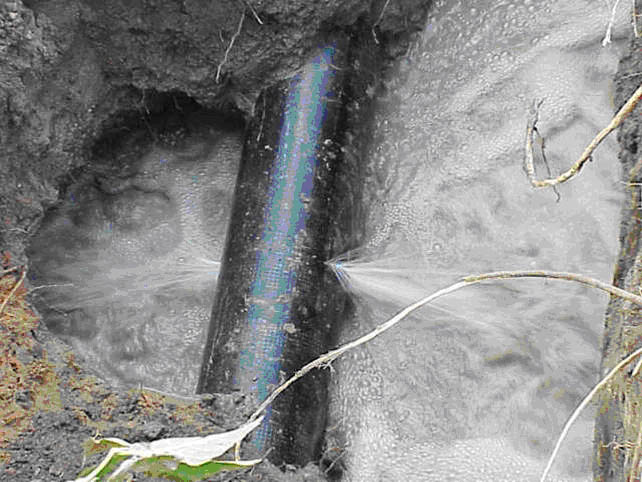
PHILADELPHIA, May 5  — A Pennsylvania federal judge on May 5 granted judgment in favor of an insurer in a water damage suit after determining that the company’s reliance on a maintenance exclusion to deny the claim was reasonable.

David Dougherty filed sued Allstate in state court for breach of contract and bad faith.   The suit was removed the U.S. District Court for the Eastern District of Pennsylvania on diversity jurisdiction grounds. Allstate denied Dougherty’s homeowner’s  water damage claim, contending that coverage was barred by the policy’s occupancy/heat exclusion and the planning, construction or maintenance exclusion.

The home was vacant and unoccupied at the time of the water loss, which occurred in winter weather.

Following cross motions for summary judgment Judge Thomas N. O’Neill Jr.held  Allstate met its burden in proving that it properly applied the policy’s maintenance exclusion in denying coverage. He held that the evidence presented

“supports a conclusion that the incident was caused by a failure to maintain the furnace at the property…On the record before me, viewed in the light most favorable to plaintiff, I find that a reasonable jury could not conclude that Allstate breached its obligation to plaintiff in applying the maintenance exclusion to bar plaintiff’s claim.”

Allstate’s summary judgment motion was also granted as to the bad faith claim.  The Judge held:

“It was not unreasonable for Allstate to focus its claim investigation on the condition of plaintiff’s furnace given that the water damage to the property occurred in January in Pennsylvania in an unoccupied property where the gauge on the oil tank read empty at the time of the loss (even though the gauge was later determined to be faulty.”

Dougherty v. Allstate Property And Casualty Insurance Company, (E.D. Pa. May 5, 2016, O’Neill, J.)

Florida Appeals Court Overturns $1.4 Million In Coverage For Sinkhole

sinkhole

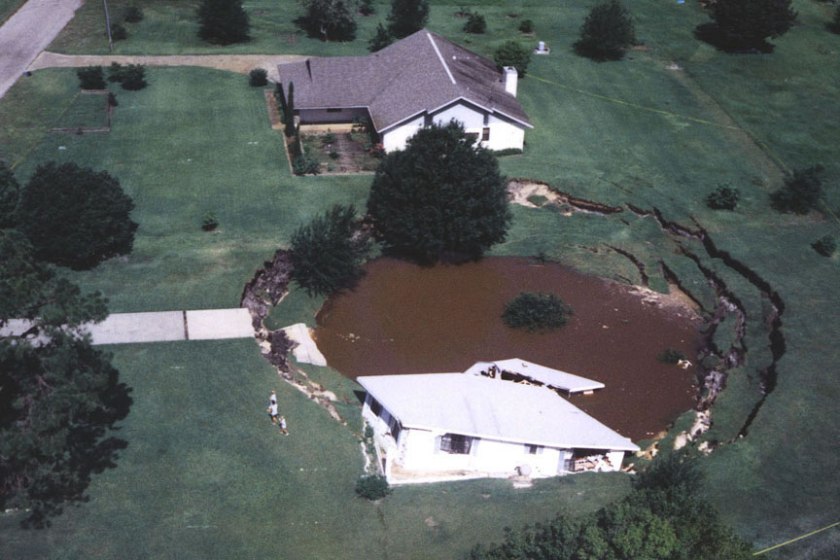
LAKELAND, March 30 — A Florida appeals panel partially  reversed a lower court decision awarding $1.4 million in fees, costs and prejudgment interest to an insured in a sinkhole coverage dispute.

In September 2005, River Oaks Condominium II Association Inc. sued its insurer Citizens Property Insurance Corp.in a Florida state court for breach of contract.  The complaint alleged Citizens failed to conduct an investigation for sinkhole claims as required under Florida law.  The condo association also sought a declaratory judgment ordering coverage for the sinkhole collapses including costs to stabilize them.  A court- ordered appraisal led to  awards totaling $4,777,607 for damage to 12 units.  The association was also awarded attorney fees and costs.

Citizens appealed to the Second District Florida Court of Appeal, and contended nearly $900,000.00 in appraisal, property management and public adjusting fees and costs were not covered, and the appeals court agreed:

“We conclude that the trial court abused its discretion in taxing the property management fees and public adjuster fees because they were not litigation costs. Further, as compared to expert witnesses, a public adjuster is more akin to a consulting expert, whose costs should not be taxed according to the guidelines. We agree with Citizens that these were not proper taxable costs, and we reverse on this issue…River Oaks was required to pay its own appraiser and bear an equal share of the umpire and other appraisal expenses.”

The Court, in an opinion written by Judge Stevan Northcutt,  also found that the trial court’s use of a 2.0 multiplier in to calculate attorneys fees was not lawful.

Citizens Property Insurance Corp. v. River Oaks Condominium II Association, Inc. (Fla. App. 2nd Dist., 2016)

Data Breach Covered Under Traditional Travelers’ Policy, 4th Circuit Says

edi-spotlight-banner

VIRGINIA,  April 11  – The U.S.  Fourth Circuit Court of Appeals  has affirmed a ruling which obligates Travelers to defend Portal Healthcare in a class action case alleging its failure to protect a records server from unauthorized access.  What is mildly surprising is that the Court found this obligation exists under an Advertising Injury Endorsement to a commercial general liability policy issued by Travelers to Portal.

In an unpublished opinion, the appeals Court approved the  reasoning of a Virginia district court, which in 2014 ruled that Portal published, and therefore disclosed, confidential patient information, which falls under the terms of its policy with Travelers.   U.S. District Judge Gerald Bruce Lee found that Travelers had a duty to defend Portal because the medical records were “published,” implicating the personal and advertising injury coverage provision in the insurer’s CGL policy.

The Appeals Court held:

“[T]he [district court] opinion concluded that the class-action complaint ‘at least potentially or arguably’ alleges a ‘publication’ of private medical information by Portal that constitutes conduct covered under the policies.”

The appeals Court commended Judge Lee’s “sound legal analysis.”

In 2013,  Portal was sued in a New York class action claim alleging that it  negligently failed to secure a server containing confidential records for patients at a Glen Falls, New York, hospital.  The complaint alleged that this confidential material was available online for viewing without the need of a password.  Google searches by several of the patients discovered the breach.

Travelers denied coverage for the suit, and Portal filed suit against Travelers in federal court in Virginia for coverage.

Travelers Indemnity Co. of America v. Portal Healthcare Solutions LLC, 14-1944 (4th Cir. 2014)

NJ: Crum & Forster No Duty To Defend Contractor in Faulty Installation Case

construction

NEW JERSEY, April 13 –  A New Jersey appeals court ruled insurer Crum & Forster  had no duty to defend an insured contractor against claims of  faulty installation of insulation and cladding at a condominium complex.

The appeals court affirmed a lower court grant of summary judgment in favor of Crum & Forster Insurance Co. relieving it of the obligation to defend contractor  Breese Corp.  Breese was a defendant in an underlying suit brought by a condominium association alleging defective work in the installation of an external insulation and finishing system, EIFS.   Breese installed insulation boards at Lakeside  at North Haledon condos.

The policy contained an  exclusion for EIFS-related claims, and the appeals court ruled it applied to bar coverage.  At the trial court level, the court there determined that the system installed by Breese met the specifications of an EIFS  — a rigid insulation board, an adhesive layer attached to the substrate, a reinforced base coat and a finish coat.

Lakeside argued that stucco did not meet the definition of substrate, and therefore that the exclusion did  not apply.  The appeals court disagreed:

“It was undisputed that the installation was not made in accordance with the plans, and so Lakeside’s reliance on using the plans to define ‘the’ only permissible ‘substrate’ is misplaced…The experts’ disagreement does not make the language of the exclusion ambiguous,…[trial ] Judge [Ralph] DeLuccia listened to the testimony, had the opportunity to observe the witnesses and his factual findings were based upon substantial, credible evidence in the record. We find no reason to disturb them.”

The underlying litigation commenced, as it so often does, after the condominium experienced water infiltration problems, including mold and bacteria issues.  Crum & Forster also argued the a bacterial and mold related exclusion also barred coverage.


Legal Malpractice Policy Does Not Cover Late Claim


DAYTON, March 24 — An Ohio federal judge has granted a legal malpractice carrier’s motion for judgment on the pleadings, finding that the claim was not submitted timely under the insured’s claims made policy.

In 2011 David and Cynthia McCartys sued attorney Miguel Pedraza for legal malpractice relating to representation in business litigation, which led to a $275,825.29 final judgment against Pedraza.


Pedraza’s insurer,  National Union, moved for judgment on the pleadings, arguing that McCarty’s claim against Pedraza was not originally reported by their insured to National Union during the policy period .  Judge Thomas M. Rose agreed, relying on policy language, and rejecting the malpractice plaintiff’s argument that the filing of their suit on the docket was sufficient to constitute constructive notice to National Union:

“The Insuring Agreement’s language is clear and unambiguous. In order for there to be coverage for a claim, the claim must be made during the Policy Period and reported to National Union pursuant to the policy’s notice provisions. The notice provisions state that written notice of a claim must be given to National Union “as soon as practicable,” but “no later” than either 60 days after the end of the Policy Period or the end of any applicable Extended Reporting Period. Sixty days after the end of the Policy Period was 60 days after February 21, 2011, or April 22, 2011. National Union asserts that there is no applicable Extended Reporting Period, and the McCartys do not dispute that assertion. Thus, in order for the claim against Pedraza’s policy to be covered, it must have been reported, in writing, to National Union by no later than April 22, 2011. In sum, National Union’s interpretation of the policy is correct.”

“[T]he McCartys argue that National Union had an obligation to continuously review the dockets of Ohio courts to determine if there were any claims against Pedraza. The McCartys do not cite to any provision of Pedraza’s policy that imposes such an obligation on National Union. To the contrary, the policy unambiguously states that notice of a claim ‘shall be given in writing to the addressee and at the address identified in Item 7 of the Declarations.’ Requiring that written notice be sent to National Union at its address is inconsistent with an interpretation of the policy that would require National Union to search for claims against its insured. The Court rejects the McCartys’ argument that National Union had actual and constructive notice of their legal malpractice action merely by virtue of its filing in a publicly available docket.”

David C. McCarty, et al. v. National Union Fire Insurance Company of Pittsburgh, PA, et al., No. 15-247, S.D. Ohio; 2016 U.S. Dist. LEXIS 39526).

N.C.: Insurer No Duty To Defend Environmental Contamination Claims

Refinery


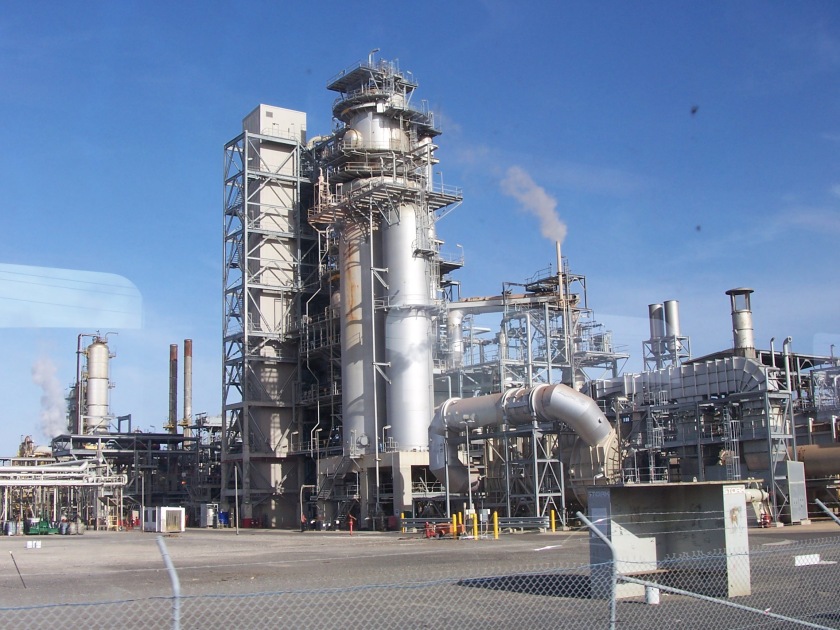
RALEIGH, N.C., March 29  — A North Carolina federal judge ruled as a matter of law that several insurers had no duty to defend its insured  under certain of its policies for two underlying environmental contamination claims, finding no plausible allegation of sudden and accidental release of contaminants which would have triggered coverage.

PCS Phosphate Co. Inc.sought a declaratory judgment for defense and indemnity from American Home Insurance  in two underlying actions alleging environmental contamination. American Home joined Zurich American Insurance Co. and Federal Insurance Co., seeking contribution and indemnity related to the defense and indemnity of PCS.

Between 1978 and 2002, PCS and its predecessor Texasgulf Inc. sent transformers to facilities in North Carolina for repairs. During the transformer repairs, PCBs were released, resulting in an E.P.A. investigation on the site.  The E.P.A. ultimately settled with certain potentially responsible parties (PRP’s) following an investigation launched in 2003.

In April 2008, PCS advised American Home that PCS had been identified as a potentially responsible party for the contamination, and sought defense and indemnity in any related litigation.  In April 2009, some of the PRP’s sued PCS, seeking contribution and reimbursement for costs related to their settlement with the E.P.A.

American Home accepted the defense of PCS in the Consol and CP&L actions pursuant to a reservation of rights.

Judge James C. Dever III granted Zurich American’s motion for partial judgment on the pleadings.with respect to its duty to defend or indemnify PCS in  the underlying actions against PCS.  Judge Dever ruled that American Home had not met its burden “to show that an allegation in either underlying complaint can be reasonably interpreted to allege a sudden release of contaminants or pollutants at the [site]” which would have triggered coverage under the Zurich American policy.

He wrote further, “American Home has not plausibly alleged that either the 1981-1986 policies or the 2005-2008 policy oblige Zurich American to contribute to PCS’s defense or indemnification in either of the underlying actions. Thus, the court grants Zurich American’s motion for partial judgment on the pleadings concerning both the Consol and CP&L actions.”

PCS Phosphate Co. Inc. v. American Home Assurance Co. (E.D. N.C. 2016)

Cyber Coverage Watch: Louisiana Dispute Over Ascent Cyberpro Policy

cyber-liability

NEW ORLEANS, March 30 – Eustis Insurance Company and its insured, New Hotel Monteleone, remain embroiled in litigation over coverage for a 2014 cyberattack, centering on the insurability of exposures Hotel Monteleone faces in the wake of the attack, including fraud recovery and operational reimbursement expenses.  The case, venued in the Eastern District of Louisiana, is a signal example of the non-standard nature of cyber-coverage, and the need for experienced counsel on all sides when policies are formulated, bought, and sold.

This week, the dispute became even more complicated when Eustis  filed a third-party complaint against wholesale insurance broker, R-T Specialty, Inc., alleging that R-T failed to properly explain to the Hotel Monteleone the precise coverage of the policy, issued by Certain Underwriters at Lloyd’s, London (Lloyd’s), subscribing to Ascent Cyberpro (the Ascent) policy.  The hotel previously initiated the suit against Eustis and Lloyds In December 2015 seeking complete coverage for its losses under the Ascent Policy

Eustis engaged R-T after the Hotel Monteleone approached Eustis about cyber coverage following an earlier, 2013 cyber attack on the hotel, for which there was no insurance coverage.  Eustis did not have broad experience with cybercoverage, and brought in R-T based on R-T’s alleged representations that it was conversant in procuring such insurance.

The Ascent Policy issued through Lloyds and R-T had an overall limit of $3 million.  The coverage, however, was restricted substantially relating to costs incurred by an insured which constituted fines or penalties.

The third party complaint against R-T Specialty alleges that the broker failed to  inform Eustis that fraud recovery and operation reimbursement might be considered to be a fine or penalty, or that a $200,000 sub limit appearing in the policy’s Payment Card Industry Fines or Penalties Endorsement may apply to fraud recovery and operational reimbursement expenses arising from the cyberattack.

The case illustrates the murkiness of the current cybercoverage market, the great variability in individual coverage, and the possible exposure of agents and brokers for failing to properly produce or explain the coverage they secure for their customers.

New Hotel Monteleone, LLC v. Certain Underwriters at Lloyd’s of London, Subscribing to Ascent Cyberpro Policy No. ASC14C00944, No. 2:16-CV-00061-ILRL-JCW (Eastern District, Louisiana 2016)


Faulty Construction Workmanship Not Covered Under Commercial and Umbrella Policies

construction

PHILADELPHIA, March 23 – A federal judge in Philadelphia has ruled that Selective Way Insurance Co. need not defend nor indemnify an insured subcontractor from allegations in an underlying suit regarding faulty workmanship, whether the workmanship is cast as negligence or breach of a construction contract.

The Villas, a  condominium owner,  filed suit against the general contractor for defective work, including cracking and water damage, and Lenick Construction was added as an additional defendant in the litigation.  Lenick tendered its defense and indemnity to Selective under a commercial liability policy, and Selective provided a defense to Lenick under a reservation of rights.

After the underlying litigation was settled between The Villas and the general contractor, the general contractor assigned its rights against the subcontractors, including Lenick to the condominium owner.

Lenick sued Selective in the Philadelphia County Court of Common Pleas, seeking a declaration that the insurer had a duty to defend and indemnify it in the underlying lawsuit. Lenick asserted a claim for breach of contract and a bad faith claim . Selective removed the case to the U.S. District Court for the Eastern District of Pennsylvania, and the parties each moved for summary judgment.

Judge Cynthia M. Rufe granted summary judgment to Selective and denied Lenick’s motion, examining the underlying pleadings and finding that defective workmanship was alleged to be the cause of the water infiltration into condominium units.   She wrote:

With regard to Lenick’s argument that the underlying joinder complaint and the Third Amended Complaint did not only allege that Lenick’s own work was deficient, but that its defective work caused damage to the work of others, the Court agrees that this is a plausible reading of the underlying complaints. However, where liability is premised upon poor workmanship, the fact that nearby work was also damaged does not change the analysis, so long as such damage is reasonably foreseeable. It is foreseeable that windows and doors which are not watertight will cause water damage inside the unit, to parts of the unit other than the windows and doors. Accordingly, these additional allegations do not give rise to a duty to defend.

The judge found no facts whch would support a tort claim against Lenick, and which would potentially be covered under the Selective Way policy.

Judge Rufe also granted summary judgment for Selective on Lenick’s bad faith claim, observing that  Selective’s interpretation of the underlying  construction litigation pleadings was not unreasonable.

Lenick Construction v. Selective Way Ins. Co.., (E.D. Pa. March 23, 2006)