Demand For Cyberinsurance Widening, Marsh Says

edi-spotlight-banner

NEW YORK, March 24 –   Purchases of cyberinsurance by customers of insurance brokerage Marsh has increased 27% since last year, according to a report published by the broker last week.  Manufacturing and technology companies are among the largest sectors of buyers of the coverage, according to the report.

Marsh attributes the growth in demand to simple evolution:   “In the face of an evolving risk landscape and an aggressive regulatory environment, organizations no longer treat cyber as a problem to be fixed, but rather as a risk to be managed,” the report says.

There is now developing a demand for cyberinsurance coverage  among infrastructure industries like healthcare and transportation insured, Marsh reports.  And new coverages for cyber losses are evolving to cover losses such as business interruption and disruption of control systems by service providers, such as power companies.

Coverage limits are increasing with the demand for such coverage, Marsh reports.  The current average limit of coverage in 2015 was  $16.9 million in 2015, up from $14.7 million in 2014, the brokerage said. The highest average business sector limit was in the technology/communication sector, at $86.7 million, according to the report.

Marsh also reported that no new major insurers entered the cyberinsurance market during the last quarter of 2015, but that this is likely to change going forward.

5th Circuit Finds No Coverage In Crane Collapse Case

Truck-Takes-Crane-8-21-2015-1-19-12-PM

GRETNA, LA., March 22 – The U.S.  Fifth Circuit Court of Appeals  has upheld a trial court determination  that the insurer of a Louisiana-based marine crane builder owed no coverage for a 2009 accident caused by poor welding. The Court ruled that the insurance policy did not apply because it covered only  vessel-related incidents and not incidents on land.

State National Insurance Co. insured Elevating Boats LLC, for losses payable for the liability of the policyholder, as the owner of a vessel, for any incident or loss arising out of ownership of the vessel.  In 2009 worker Larry Naquin Sr. had sued Elevating Boats for personal injuries on the theory negligent welding of the crane in question.  During a test Naquin was running on the crane, the crane separated from its base and fell over, killing one, and causing Naquin two broken feet and a hernia.  The accident occurred on land and nowhere near a vessel, according to the opinion:

“Naquin’s incident in no way arose out of EBI’s conduct as ‘owner of the vessel …Furthermore, the land-based crane did not break on or even in close proximity to a vessel. Thus, EBI’s attempts to craft a causal connection to a vessel are discharged, plainly and simply, by the underlying facts and Naquin’s holding.”

In May 2012 a Louisiana federal jury found that EBI was negligent in welding the crane to its platform and that it was therefore liable for Naquin’s injuries.  During those proceedings the trial judge granted State National’s motion for summary judgment, finding that the policy did not cover incidents on land. 

Naquin urged an interpretation of a  “blanket reading” of State National’s policy such that it would provide coverage for  “any casualty or occurrence,” but the Appeals Court found the argument “strained,” and contrary to common law which required a vessel- related loss in such circumstances.

The 5th Circuit Court concluded,  “Naquin’s incident in no way arose out of EBI’s conduct as ‘owner of the vessel.’”

Naquin v. Elevating Boats, et. al., (5th Cir., March 22, 2016)

Property Value Admissible By Allstate To Prove Arson Fraud

arson

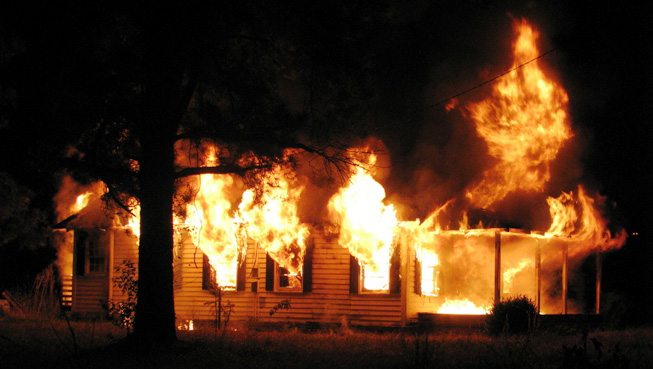
SPRINGFIELD, Feb. 29 –  A federal judge in Missouri has denied an insured couple’s attempt to exclude expert evidence Allstate Insurance  intends to submit  in a declaratory judgment action in which it seeks to have its denial of a homeowners insurance coverage claim upheld.

In Allstate Indemnity Company v. Joseph Dixon, et al., No. 14-cv-03489-MDH. W.D. Mo.; 2016 U.S. Dist. LEXIS 24678, U.S. District Judge Douglas Harpool denied a motion to strike Allstate’s expert disclosures filed by Allstate insureds Joseph Dixon and his wife, ruling that the value of the couple’s home could be probative of the couples’  financial motive to commit arson fraud. The Court found that Allstate’s proposed testimony from a county assessor as to the value of the insured couple’s home would not prejudice the homeowners, although it reserved final judgment about the precise nature of the allowed testimony until later in the case.

Allstate  denied coverage for the April 2014 fire, claiming that the Dixons falsified material facts with regard to the claimed loss. A cause and origin and claims investigation by Allstate revealed that the fire was intentionally set.  The Dixons contended in their motion to strike expert disclosures that the value of their home was not in dispute, and that expert testimony concerning the value of the property would be confusing to the jury as well as irrelevant, cumulative and prejudicial.

In denying the motion, Judge Harpool cited to an Eighth Circuit U.S. Court of Appeals’ ruling which discussed proper evidence of motive in arson fraud cases,  Gen. Cas. Ins. Companies v. Holst Radiator Co. (88 F.3d 670, 672 [8th Cir. 1996]).

Allstate v. Dixon (W.D. Mo. 2016)

Pennsylvania Asbestos Reinsurance Dispute Stayed Under First Filed Rule

reinsurance

PHILADELPHIA, March 3 — A federal judge has granted a motion filed by R&Q Reinsurance Company to stay a reinsurance coverage suit filed by St. Paul Insurance arising out of more than $10 million in asbestos – related payments made by St. Paul on behalf of an insured.  St. Paul sought reimbursement  from R&Q pursuant to a reinsurance treaty with INA Reinsurance, to which R&Q has become a successor in interest.

The case  has now been stayed pending the outcome of a previous case filed by R&Q in United States District Court in Illinois in 2015. That case is captioned R&Q Reinsurance Company, f/k/a Ace American Reinsurance Company, f/k/a Cigna Reinsurance Company, f/k/a INA Reinsurance Company v. St. Paul Fire & Marine Insurance Company (No. 15-cv-07784, U.S.  N.D. Ill.).

U.S. District Judge Judge Joel H. Slomsky originally denied the motion to stay in the Pennsylvania action  on Dec. 18, but vacated that ruling as part of a decision he rendered on a motion to dismiss subsequently filed by R&Q in Pennsylvania .  R&Q sought dismissal or stay in Pennsylvania  pursuant to the first filed rule, citing to the Illinois litigation filed in 2015.

St. Paul had already filed and fully briefed a motion to transfer venue in the Illinois proceeding.  Judge Slomsky stayed the Pa. proceeding pending rulingson jurisdictional motions in the Illinois action.

St. Paul Fire and Marine Insurance Company v. R&Q Reinsurance Company, No. 15-cv-5528, E.D. Pa. March 3, 2016.


Insurer May Be Vicariously Liable for Negligent Oil Spill Remediation Contractor

1024x1024

BROOKLYN, N.Y., March 2 — The Second Department of the New York Supreme Court Appellate Division has held that a negligence claim alleged against an insurer in a dispute regarding the remediation of oil contamination should have been permitted to proceed, reversing the trial court’s dismissal of the claim.

In  Richard Bennett, et al. v. State Farm Fire and Casualty Co., Plaintiff  Richard Bennett and his family sustained a home heating oil spill in 2011. Bennett’s house at the time was insured by State Fire Farm and Casualty Co.,  and the policy included a third party liability claim protection.   State Farm paid for remediation  overseen by the NY State Dept. of Environmental Conservation, which acted as the third party claimant because of the spill.

A dispute arose, and Bennett sued a number of parties involved in the remediation, including State Farm.   The trial court granted State Farm’s motion to dismiss claims against it, including a claim that H2M, a remediation contractor allegedly  supervised and directed by State Farm, acted negligently in the cleanup.

While the Appellate Division affirmed the trial court’s ruling as it pertained to fraud, breach of fiduciary duty, and punitive damages claims against State Farm, it ruled that a negligence claim against State Farm was viable:

“The complaint also alleges that State Farm supervised and directed the work of H2M, potentially giving rise to vicarious liability on the part of State Farm for negligence, if any, of that contractor…Under these circumstances, the complaint states a cause of action for negligence against State Farm.”

Editor’s Note:  Extracontractual avenues of liability on the part of insurers continues to evolve.  Insurers must take care to place the necessary protective layers between themselves and third party repair and remediation vendors.  If they do not, they risk negligence liability on vicarious liability theories.

Bennett v. State Farm et al, (N.Y. App. 2nd Div. March 2, 2016)

Bullet-Proof Insurance Coverage Opinions – Part II

Choices of a businessman

In Part I of this post we looked at the beginnings of a good coverage opinion – clear identification of the issues, and a comprehensive matrix of facts upon which the coverage opinion is based.  In Part II, we examine the remaining building blocks of a bullet-proof coverage opinion.

 Include The Policy Provisions At Issue

In order to launch into the meat of the coverage opinion, the applicable provisions of the policy should be included in the coverage opinion.  I prefer to actually “snapshot” .pdf cuts of the actual policy terms into the body of the opinion so that the reader sees not just the provision, but how it appears in the policy.  This is by no means mandatory, but verbatim inclusion of the policy provisions at issue is, however.

The opinion writer should take care to not only produce coverage terms, but applicable exclusions, and exceptions to the exclusions, so that all of the tools are in full view of the reader.

Analysis and Discussion of Applicable Law

There is nothing totally new under the sun, which means more likely than not the policy provision on which outside counsel is providing opinion has been interpreted in prior opinions.  These prior rulings provide the important, and in some cases binding, context in which the applicable policy terms will be viewed.

Any judicial guidance of the same or similar coverage issues  is useful, but the best guidance comes in the form of cases with similar factual backgrounds (yet another reason for a comprehensive discussion of the known facts near the top of the coverage opinion).   While the opinion writer needn’t necessarily provide an answer to the coverage question in this phase of the opinion,  good analysis of applicable law may start to orient and point the reader in the direction the opinion is going to read.  As we said, there is nothing really new under the sun.

While jurisdictional case law is obviously ideal, outside counsel should also include opinions from other jurisdictions which bear factual similarity to the coverage analysis  being undertaken.

Tying It Together: Legal Analysis and Opinion

With the groundwork laid, outside counsel can now gather all of the materials she has collected in the opinion, and provide a logical analysis of the coverage question presented to outside counsel by the client.  The conclusion of the opinion letter should be the culmination of the facts, the policy provisions implicated, and the applicable law.

This is not the time for surprise endings:  a good coverage opinion will logically flow to the conclusions drawn.  Conclusions which are incongruent with anything that has come before, whether it be the facts, the policy provisions, or the law, is a sign that something is amiss, either with the predicates to the conclusion, or the conclusion itself.  It is not the kind of disconnect a client is looking for, so during the draft phase, the inconsistencies must be reconciled for the opinion to be reliable.

Going The Extra Mile:  Providing for Contingencies

The best outside coverage lawyers anticipate the needs of their clients.  They also recognize, in cases where investigation is ongoing, that further developments might impact the opinion.  Such possibilities should be included in the coverage opinion, so that the client knows how the validity of the opinion could be impacted by newly developed facts.  It is also a good reminder to the legal department requesting the opinion that the process is a fluid one, and an updated opinion might be the best course after new, significant information is learned.

Insurance company legal departments want solid coverage opinions which will withstand scrutiny of not just themselves, but others should that become necessary down the road.  For that reason, a comprehensive statement of facts, of the applicable policy, and of the relevant law should be provided.  The analysis of coverage and conclusion should flow from these elements, and the client should be notified that there may be contingencies in an ongoing investigation which could impact the opinion, requiring supplementation.


 

Bullet-Proof Insurance Coverage Opinions, Part I

choices-Fotolia_43362319_XS.jpg

In this post, we begin a brief look at the building blocks of a bullet-proof legal opinion on an insurance coverage issue.  Legal departments should look for these elements and insist on them in written coverage opinions from outside counsel, and outside counsel should make sure to use these elements as touchstones, in order to provide the most reliable coverage opinion possible.

Identify and Clarify The Precise Coverage Issue(s) Examined

Clarity and precision are required up front — if they are not, the entire opinion will falter and fail to provide what the client is asking for.  This seems obvious, but I am continually surprised by how often I get the question (or at least of piece of it)  wrong during the first phone call from general counsel or a claims executive.  It should be mandatory for outside counsel to state verbally or in a preliminary note to the client what she believes the coverage issue to be.  Why?  Because it is the first and best chance the client will get to make sure it is going to get what it believes it is asking for.  And it is the first and best chance to clear the legal opinion of any  confusion, mistake, and misunderstanding.

Another reason for this exercise is to identify sub-issues, or follow-on coverage issues which may present themselves.  If the client wants an opinion on Exclusion A, might it also want opinion on Exclusion D, as well as the exceptions to exclusions A and D?  Should it want one?   Not only does this ensure that the client gets an opinion on what it wants, it ensures the client gets an opinion which serves the purposes behind it:  advice and protection.   A partial coverage opinion which ignores related issues is likely to be criticized as myopic or artificially crafted in favor of insurer.    A complete coverage opinion, on the other hand,  covering all related issues, is much less assailable down the road.

Once the issues are clarified and refined, they should be stated at or near the outset of the written coverage opinion.

Identify  and Lay Down the Factual Matrix of the Coverage Opinion

A good legal opinion contains a thorough recitation of all known, relevant  facts germane to the coverage determination.  The written opinion should also advise the insurer that if there are additional facts the legal department would like outside counsel to consider, those facts should be provided to counsel and a supplemental opinion offered.   While this serves to protect outside counsel in the proffering of an opinion, it also ensures again that the client gets precisely what it wants from outside counsel.  It provides the legal department seeking the opinion to make sure that all of the facts it wants considered  to be taken into account, and ensures that mistakes can be fixed before the coverage opinion is provided.

All key facts should be stated in the written coverage opinion.  This also implies that facts which are peripheral, irrelevant, and unnecessary to the coverage determination need not be continued.  Heft does not equal value, and no in-house general counsel is going to appreciate you providing a 20-page  coverage opinion when 8  would have done the job just as well.  The coverage  opinion will only be as good as the foundation of facts upon which it is based, and set down in the opinion itself.

In Part II of Bullet-Proof Coverage Opinions, we will take up the importance of inclusion of the applicable policy terms and conditions at issue, analysis and discussion of applicable legal precedent interpreting those provisions, thoughtful legal analysis, and providing for contingencies in the opinion.

Wyoming Refinery Bad Faith Claim Against Swiss Insurer To Continue

Refinery

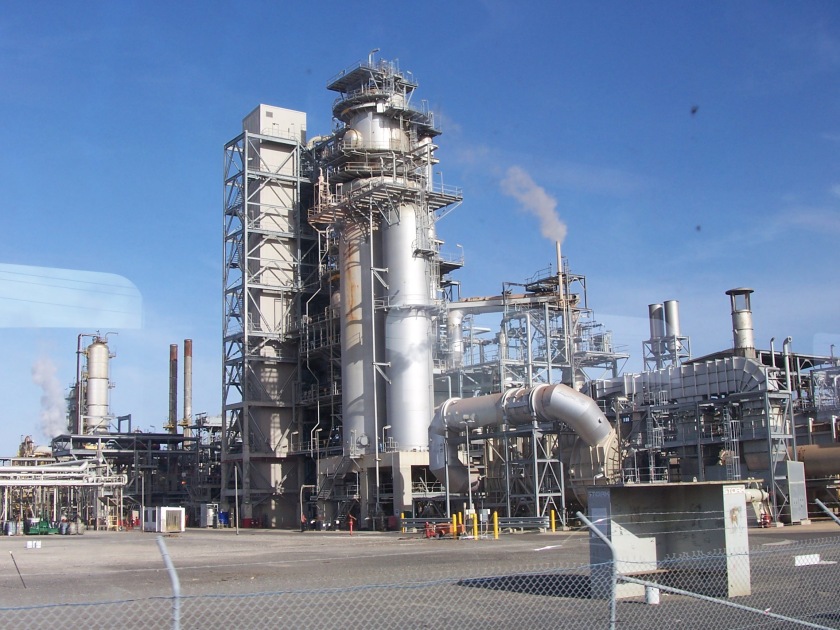
WYOMING, March 11 –  A Wyoming federal judge ruled that a unit of Sinclair Oil  Corp. can maintain a bad faith claim against insurer Infrassure Ltd.  under Wyoming law, although the judge has ruled that New York law controls the companies breach of contract claim.

U.S. District Judge Nancy D. Freudenthal denied motions to dismiss filed by Infrassure, of Switzerland, which sought dismissal of  Sinclair Wyoming Refining Co.’s bad faith and declaratory judgment claims.  Judge Freudenthal wrote:  “The court finds that Wyoming law would apply to Sinclair’s bad faith claim because the choice of law language in the [insurance program] is narrow and does not include issues arising related to the performance of the contract.”New York law would have been far more restrictive of the bad faith claim.

The coverage dispute arises out of a  September 2013 explosion at a Sinclair refinery in Sinclair, Wyoming.  Sinclair alleges it lost $150 million in property damage and lost income.  Under Sinclair’s insurance program, Infrassure owes 7.5% of the claim, or about $4.5 million. Infrassure hasn’t payed anything on the claim yet, according to Sinclair,

Judge Freudenthal did not agree with Infrassure that the bad faith claim was controlled by New York Law because it was “inexplicably intertwined” with Sinclair’s contractual claims. She ruled that the policy’s choice of law provision did not preclude Wyoming law from applying to the bad faith claim:

 “Even if language requiring ‘construction and interpretation’ of the contract under New York law applied, the application of New York law prohibiting an independent claim for bad faith would be contrary to a fundamental policy in Wyoming, which based on the allegations in the pleading has a materially greater interest than New York in the determination of this issue.”

The case is Sinclair Wyoming Refining Co. v. Infrassure Ltd., case number 2:15-cv-00194, in the U.S. District Court for the District of Wyoming.

Third Circuit: No Coverage Owed In IP Battle

intellectual%20property2

PHILADELPHIA, March 10 – The U.S. Court of Appeals for the Third Circuit has affirmed judgment for insurer USLIC, holding it has no duty to defend or indemnify its insured in an battle over appropriation of computer software /  intellectual property.

In Hammond v. USLIC, the Plaintiff, Hammond, entered into a working relationship with TCA and LANTek to develop hazmat transportation compliance software.  After a dispute arose and the companies filed a declaratory judgment action against Hammond alleging misappropriation and infringement, Hammond tendered responsibility for his defense and indemnification to USLIC under Businessowners’, Technology and Professional Liability, and Malicious Prosecution endorsements to his USLIC policy.  USLIC denied coverage, relying in part on a policy exclusion disclaiming coverage for the alleged infringement of patent, copyright, and other intellectual property rights.  Hammond then filed breach of contract and bad faith claims against the insurer.

Judge Arthur Schwab of the U.S. District Court for the Western District of Pennsylvania granted USLIC’s motion for judgment on the pleadings after undertaking analysis of the civil action filed by TCA and LANTek against Hammond.   The Third Circuit affirmed, finding that while the policy did afford Hammond coverage for “personal advertising injury” claims and claims of “malicious prosecution,”  the request in the underlying suit for statutory attorneys fees arose out of patent and trademark issues, not claims of malicious prosecution.   The Court also held that the intellectual property infringement exclusion of the policy supported USLIC’s denial of coverage.

The Court affirmed dismissal of Hammond’s follow-on bad faith claim as well.

Hammond v. USLIC (3rd Cir., March 10, 2016)

Barge’s Destruction of Beachfront Home Not Covered By Homeowner’s Policy, Mississippi Supreme Court Rules

519032150_c_570_411

BILOXI, Jan. 5 – The Mississippi Supreme Court ruled that the destruction of a beachfront home by a barge which became loose from its moorings during Hurricane Katrina was not a covered loss under the applicable homeowner’s insurance policy.

In Porter v. Grand Casino et al, Chreryl Porter’s beachfront vacation home was completely destroyed by a barge owned by Grand Casino that had become loose from its moorings as a result of Hurricane Katrina.  She submitted a claim to her homeowner’s carrier, State Farm, which denied the claim, citing a policy provision excluding coverage for property damage arising out of flood, surface, and tidal water.

Porter filed breach of contract and bad faith claims against State Farm, arguing that the cause of the loss was Grand Casino’s barge, and not water.  She also filed claims against Grand Casino and her insurance agent, Max Mullins.  The trial court granted summary judgment for all defendants, and the Court of Appeals affirmed.

In affirming the judgment in favor of State Farm, the Mississippi Supreme Court in a 7-1 ruling held that the homeowner’s policy excluded from coverage any losses  which would not have occurred but for the movement of surface water.  The Court referred to policy language which stated, “we do not insure under any coverage for any loss which would not have occurred in the absence of … [w]ater damage,” and  ruled that where water caused the debris to collide with the property, such a loss was properly excluded.

Porter v. Grand Casino, et. al (Miss., Jan. 5, 2016)